

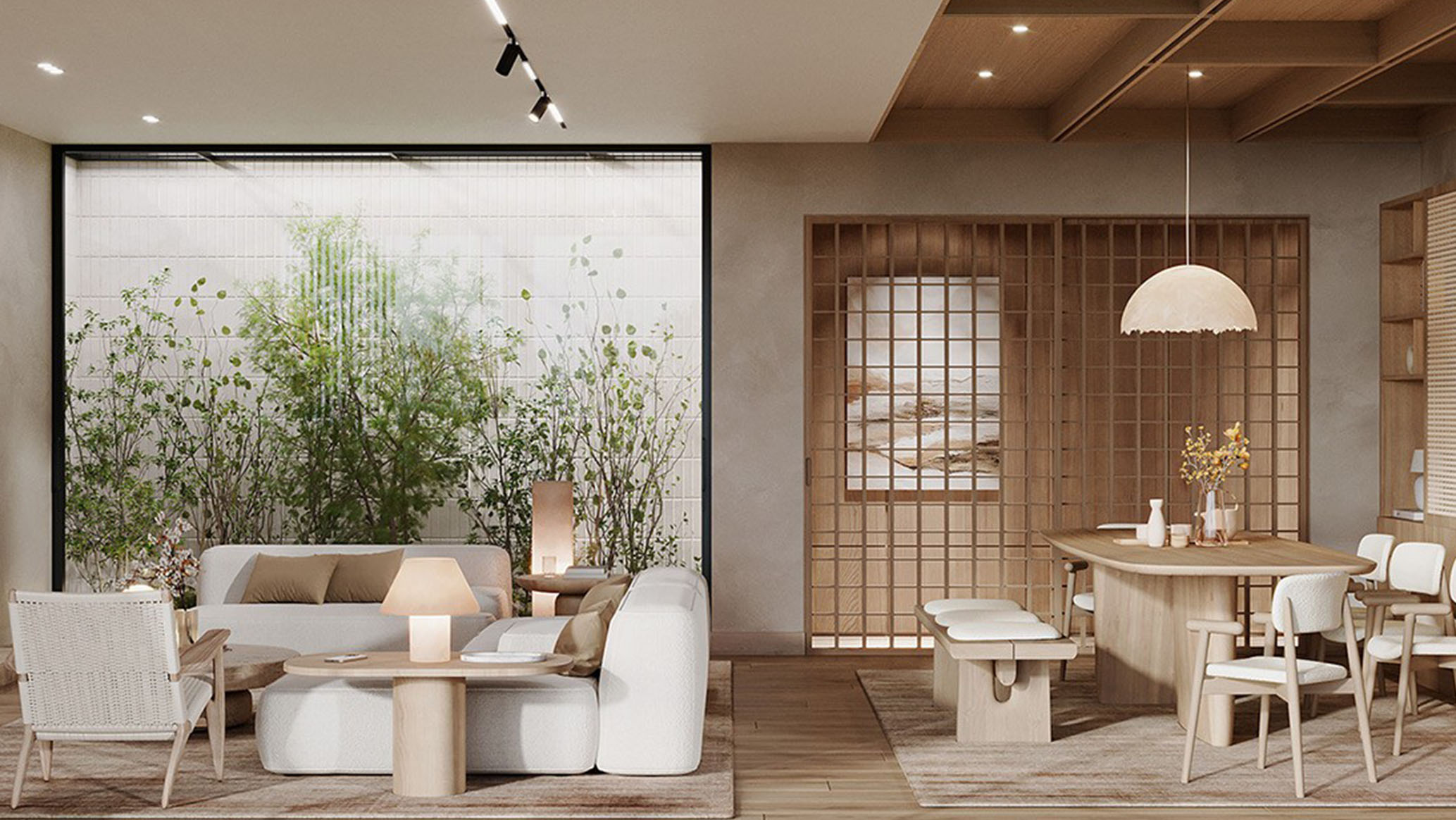
Japandi Interior Design in Singapore For 2026
Key Takeaways
1. Japandi style remains on the rise. Singapore luxury homeowners keep searching for Japandi décor through online platforms which showed a 212% increase from 2021 to 2022 and this trend will continue with various online searches until 2026.
2. The 2026 update introduces warm minimalism design elements. The current Japandi interior design for today features deeper wood tones and limewash walls and low-profile furniture and artisanal lighting, which create a more complex appearance than previous pale Japandi interior designs.
3. The design functions well in both Singapore’s climate and its urban residential spaces. The Japandi interior design style in Singapore operates effectively because its neutral color schemes combined with breathable materials and engineered wood products and open space designs match the requirements of humid weather conditions and small urban living spaces.
4. The visual appearance of materials determines their impact. Heavy decoration gets replaced by Oak and Walnut and Travertine and Linen and matte finishes. The combination of texture and proportion and craftsmanship establishes dimensional space which remains free from clutter.
5. Japandi design style functions effectively in various property types. The style provides discreet luxury to all types of properties, which range from 5-room HDB flats to penthouses and landed homes.
Introduction
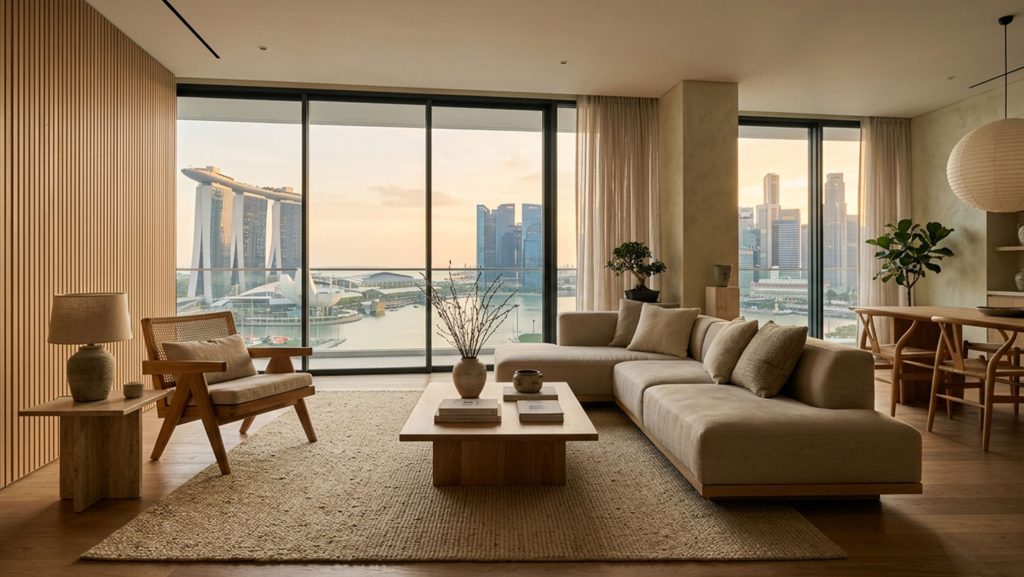
The ongoing development of Japandi design style continues to create high-end interior spaces throughout Singapore, which provide a peaceful and sophisticated design solution for contemporary urban environments.
The term “Japandi” has seen rising online interest in recent years, search demand for Japandi-related décor terms jumped by more than 212% between 2021 and 2022, signalling momentum that continues into 2025 and beyond. The design style combines Japanese minimalism with Scandinavian design elements to create a classic look which attracts wealthy homeowners and developers who want to build enduring aesthetic value.
The look will transform in 2026 through the use of deeper textures and natural materials which create spaces designed for relaxation and calming spaces. The guide shows how Japandi design works for Singapore’s luxury homes and penthouses and boutique hospitality spaces by showing designers how to create the style without creating visual overcrowding.
The Rise of Calm Luxury in Singapore Homes
Customers in the luxury market now prefer more understated designs which feature fewer ornamental details when they shop for penthouses and landed homes and waterfront condominiums. They prefer clean lines which use natural materials instead of decorative elements which create a heavy appearance.
The main reason why Japandi design has become popular. Japandi combines minimalism with warmth and complements many of the small, dense urban spaces where people want to live but that do not compromise their experience or quality.
The architectural design of multi-storey buildings benefits from empty spaces which showcase their important features. Developers use simple color schemes and natural materials to create designs that attract wealthy buyers who want to build their projects.
The next thing we need to do is identify what these terms mean in today’s language.
What is Japandi in 2026?
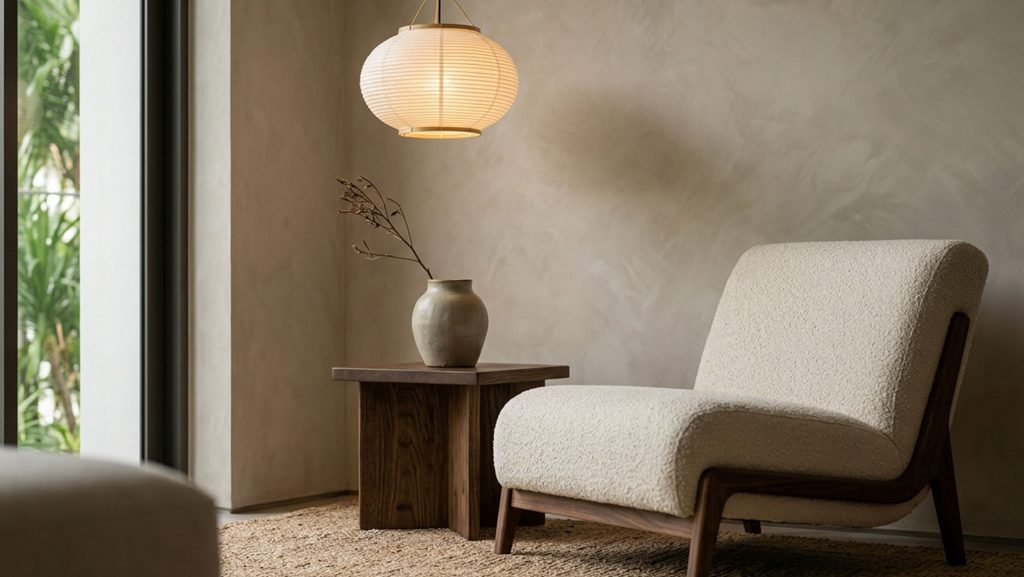
At its core, Japandi style merges two design philosophies:
- Japanese minimalism: calm, restrained, functional
- Scandinavian comfort: warmth, texture, and light
In 2026, the look evolves slightly in Singapore:
- Deeper wood tones instead of pale finishes
- Textured limewash walls
- Low-profile furniture with subtle curves
- Handcrafted ceramics and artisanal lighting
The design creates a space which appears intentional while maintaining its comfortable atmosphere.
The Japandi style establishes a warm atmosphere through its combination of minimalism and aesthetic elements. The combination of soft fabrics and woven rugs and matte surfaces creates a warm atmosphere in rooms.
The design has a strong local presence because its practical characteristics help to explain its visual attractiveness.
Why Japandi Works for Singapore’s Climate and Lifestyle?
Interior design decisions in Singapore arise from its tropical climate and its urban environment.
1. Ventilation and Light
Neutral color schemes work to reflect daylight which keeps interiors from becoming too dark. The combination of linen curtains and wooden screens creates a gentle light filter that provides privacy while allowing air to move freely through the space.
2. Space Efficiency
A major design element of private condominiums and landed homes focuses on creating open-plan living spaces. The Japandi interior space functions effectively because it uses compact furniture and avoids unnecessary decorative elements.
3. Quiet Luxury Appeal
Wealthy clients show a stronger preference for timeless designs which remain in fashion through time, and they create this attachment because they desire designs which will endure throughout their life. The combination of clean lines and natural materials creates a lasting design which helps to maintain property values throughout time.
The high-end buyer market requires developers to showcase upscale designs through their Japandi presentation, which establishes what luxury buyers expect to see in their target show units.
Designers can clarify the identity of Japandi by comparing it with modern minimalism, which shows two major points of difference for identifying how to apply any design filter.
Japandi vs. Modern Minimalism
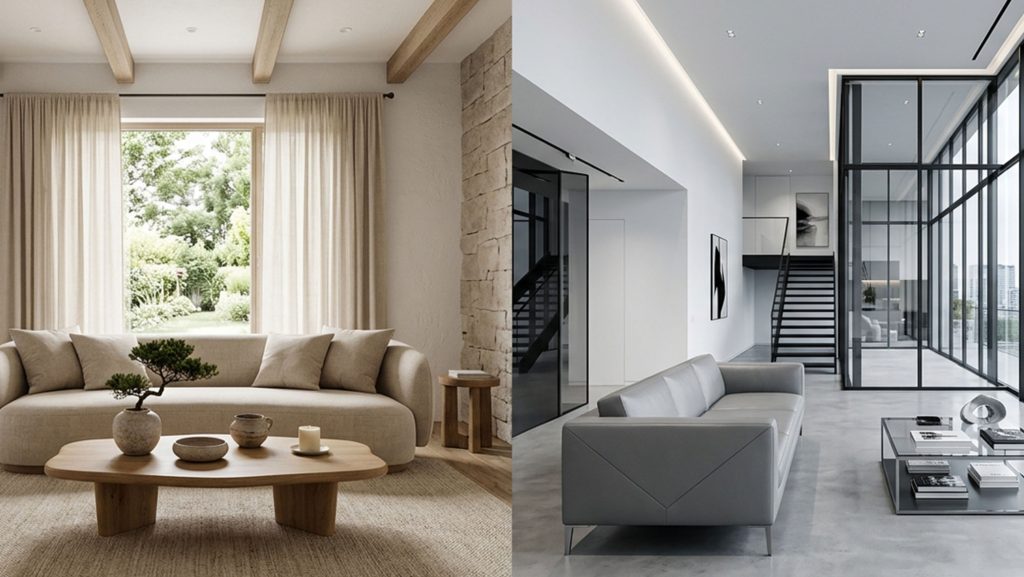
Japanese design systems give priority to simplicity, while Japandi design adds warm elements through its textured materials, which create an appealing atmosphere for home environments.
| Element | Japandi | Modern Minimalism |
| Colour Palette | Warm neutrals | Cool whites and greys |
| Materials |
Wood, linen, stone |
Glass, metal, lacquer |
| Mood | Calm and inviting | Sleek and crisp |
| Furniture | Low, organic shapes | Angular, streamlined |
Once distinctions are clear, material selection becomes the focus.
Which Materials Shape the Look?
Material selection determines how the final appearance of a product will turn out.
1. Wood
Three types of wood that people commonly choose include oak, walnut, and ash. The material shows better performance for Singaporean conditions because engineered wood withstands humidity more effectively than solid wood.
2. Stone and Plaster
The combination of travertine and limestone with textured plaster walls creates visual balance by adding depth to spaces.
3. Fabrics
Linen and cotton together with wool introduce a gentle touch into the fabric collection. Neutral shades such as sand, taupe, and muted grey dominate.
4. Lighting
The combination of paper lanterns and sculpture pendants together with hidden LED lights creates a warm atmosphere for the space.
Selecting fewer items while choosing from higher quality options works according to the principles of Japandi design style.
We started our session by examining various finish options before we transitioned to discussing their application in different space environments.
Design Different Spaces with Japandi Principles
The design process requires you to adapt different approaches according to the specific requirements of each room instead of using a standard method for the entire home.
1. Living Room
- Low sofas with wooden frames
- Minimal open shelving
- Statement coffee table in natural stone
The space should contain only a small number of selected decorative items.
2. Bedroom
- Platform bed with upholstered headboard
- Neutral bedding
- Soft bedside lighting
The space should contain only one large artwork piece that serves as the focal point for the area.
3. Dining Area
- Solid wood table
- Sculptural dining chairs
- Simple pendant light
The two objectives require people to maintain balance while practicing moderation.
The current trend in Singapore sees non-luxurious lodging facilities adopting Japanese and Scandinavian design, which now extends to both boutique hotel interior design and private club property design. The designs create a peaceful atmosphere that ensures maximum guest happiness while keeping their privacy intact.
You can observe real-world applications of these principles by visiting the recent home renovations completed by a local resident in Singapore.
5-Room HDB Japandi Renovation in Sengkang East Drive
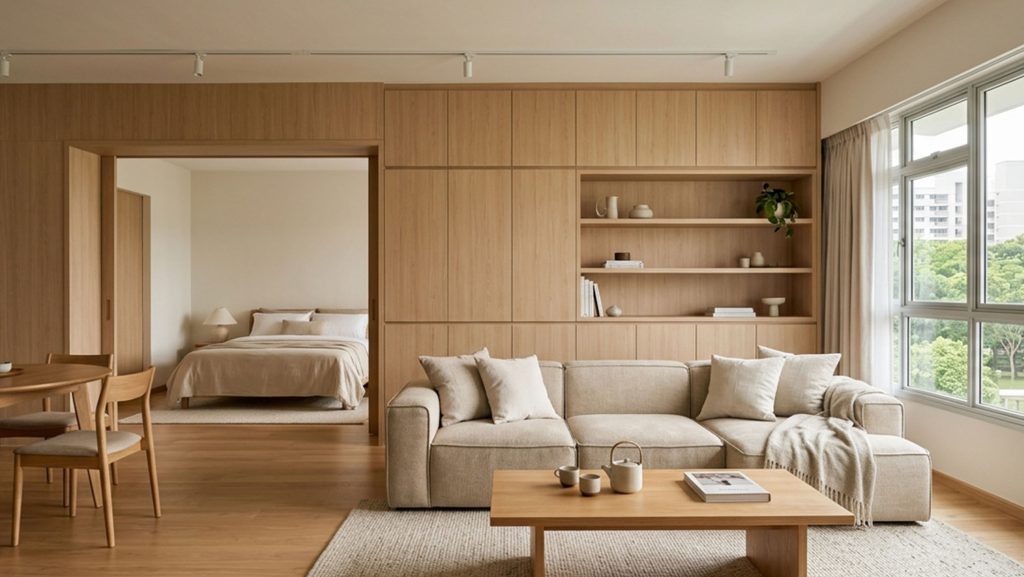
A recently redesigned 5-room HDB flat along Sengkang East Drive was done through a combination of Japanese and Scandinavian design elements that create a peaceful environment with simple design elements.
The family selected DISTINCTidENTITY for their interior project because they wanted a peaceful and spacious design that would create a quiet space which contrasts with Singapore’s busy urban environment. This was achieved through the use of natural wood textures combined with a selection of neutral finish materials.
The built-in storage system along with light wood paneling throughout the living area created a clean design that made the home look more spacious. Both characteristics demonstrate the essential elements of simplicity and warmth that define Japandi style.
Key features of this example:
- The design uses a neutral color scheme with wood tones that create a calming atmosphere.
- The design maintains open space by using integrated storage solutions and minimalistic design elements.
- The design maintains overall design consistency which includes using peaceful bedroom spaces and strategic furniture arrangement.
This project demonstrates how Japandi principles can transform standard Singapore residential units into sophisticated yet functional spaces that meet urban living requirements for 2026.
Homeowners in Singapore continue to express various opinions about the use of Japandi design, which people often misinterpret and debate.
What are the Common Misconceptions?
1. “The design element of Japandi makes spaces feel excessively simplistic.”
When executed properly, texture replaces decoration. The use of layered materials creates visual interest without creating visual clutter.
2. “The design element of the product restricts its use to small residential spaces.”
The spaciousness of large properties supports proper movement throughout the entire space.
3. “Sculptural furniture pieces become more visible in rooms that contain abundant floor space.”
People perceive neutral colors as uninteresting because they lack strong visual appeal.
The natural wood colors combined with the subtle texture changes create a texture which preserves visual interest while eliminating patterns.
The Japandi interior design in Singapore requires space planning that enables various functions to operate seamlessly while maintaining aesthetic balance through the selection of premium materials.
Conclusion
The Japandi Style will maintain its appeal to Singaporean property developers who build high-end properties until the end of 2026 because it combines neutral design elements with natural building materials and promotes peaceful living through its design.
Your interior design project will achieve an elegant appearance through the combination of your selected texture and proportion elements with your detailed layout work. MJS Interior delivers refined Japandi interior design in Singapore which are backed by over two decades of professional experience.
The CaseTrust-RCMA accredited interior design consultancy in Singapore provides complete interior design services, starting from expert consultations and 3D design previews until final project delivery for both residential and commercial spaces.
With 5-room HDB flats to private condos and landed homes, MJS Interior balances practicality with understated elegance, all at fair, transparent pricing. Visit their showroom at Blk 844 Sims Ave #01-704 (S400844), call +65 6742 1221/+65 6266 1221, or email [email protected] to request a quotation and begin your 2026 renovation plans.
FAQs

Q1. What is Japandi style and why is it popular in Singapore?
The Japandi design style creates Japanese minimalism which combines with Scandinavian design elements. Its design elements create a peaceful atmosphere with clear visual boundaries which makes it suitable for Singaporean urban housing.
Q2. Is Japandi interior suitable for large luxury homes?
The design style creates open spaces which use natural materials to enhance the design of large buildings.
Q3. Does Japandi interior design in Singapore work in humid climates?
The design style works effectively in Singapore because of its material choices which include engineered wood and breathable fabrics.
Q4. Is Japandi expensive to achieve?
The style requires different spending levels because it emphasizes using fewer items which have greater value.
Q5. Can commercial spaces adopt Japandi style?
The Singaporean boutique hotels and upscale restaurants and premium offices have selected this design style because it creates an elegant ambiance.