

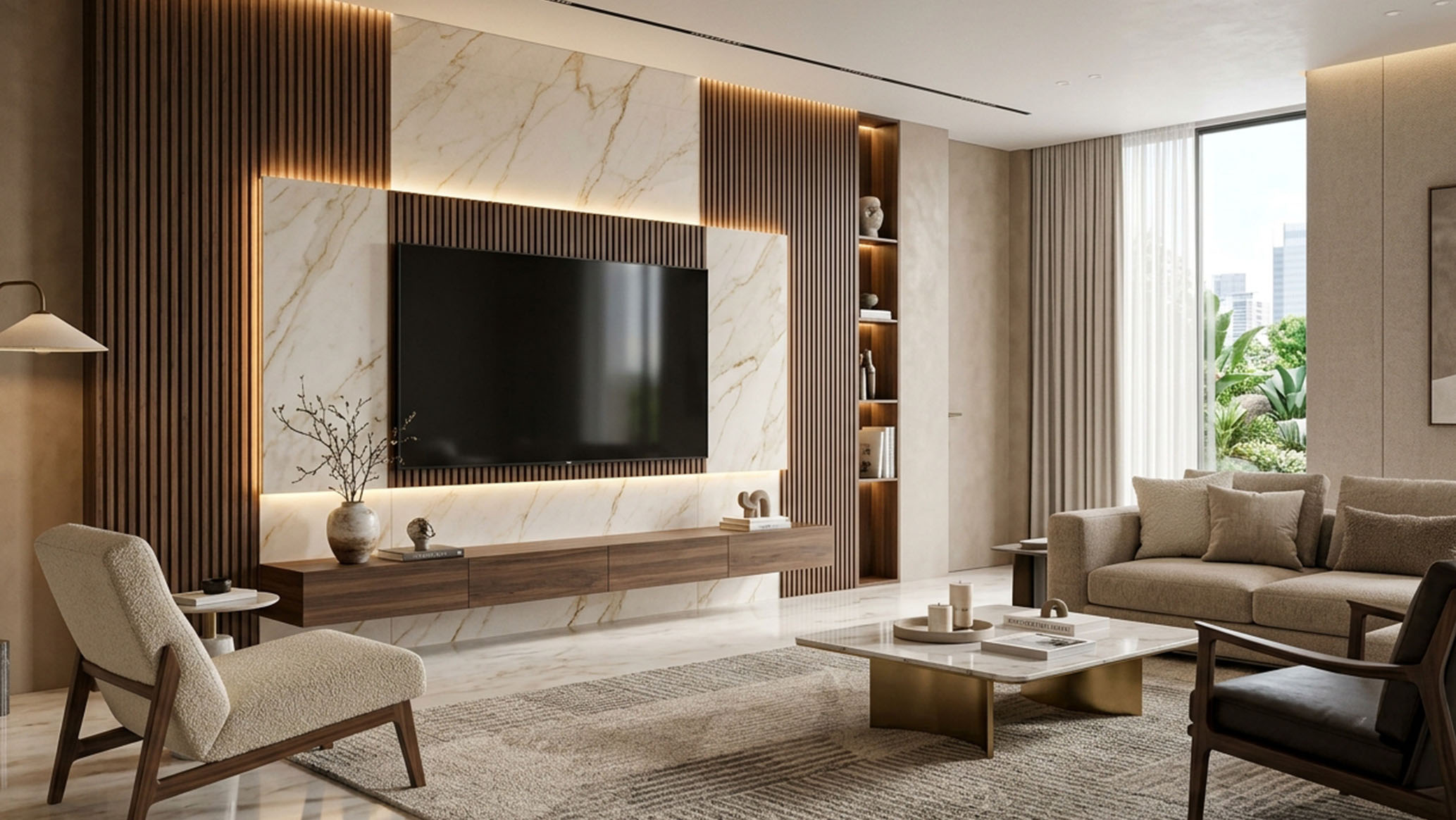
Best TV Feature Wall Design Ideas For Your Home in 2026
Key Takeaways
1.The architectural field now recognizes TV feature wall design as a complete architectural discipline which transcends its previous function as a decorative element. Singaporean homeowners in 2026 will integrate their televisions into their built environment through paneling and cabinet work and lighting systems instead of using separate television stands.
2.Modern living rooms are shaped by textured surfaces which create different design possibilities. Fluted panels and curved forms have become common elements, appearing in approximately 36% of all living-room renovations which demonstrate a major trend toward tactile feature walls.
3.Luxurious spaces achieve their desired level of opulence through the selection of specific materials. The combination of marble slabs and large-format porcelain and engineered wood and subtle metal trims produces a refined effect which avoids excessive visual impact. The visual balance of a scene depends on two factors which are proportion and lighting.
4.The perfect screen location needs to be between 1 and 1.1 meters above the floor so that it can achieve its best audiovisual performance together with proper wall space and hidden wiring and multiple lighting systems.
5.A planned TV feature wall establishes permanent value for a building space. The design solution enhances aesthetic appeal on top of its storage capacity improvement and architectural strength enhancement and property market value increase for both residential and commercial buildings.
Introduction
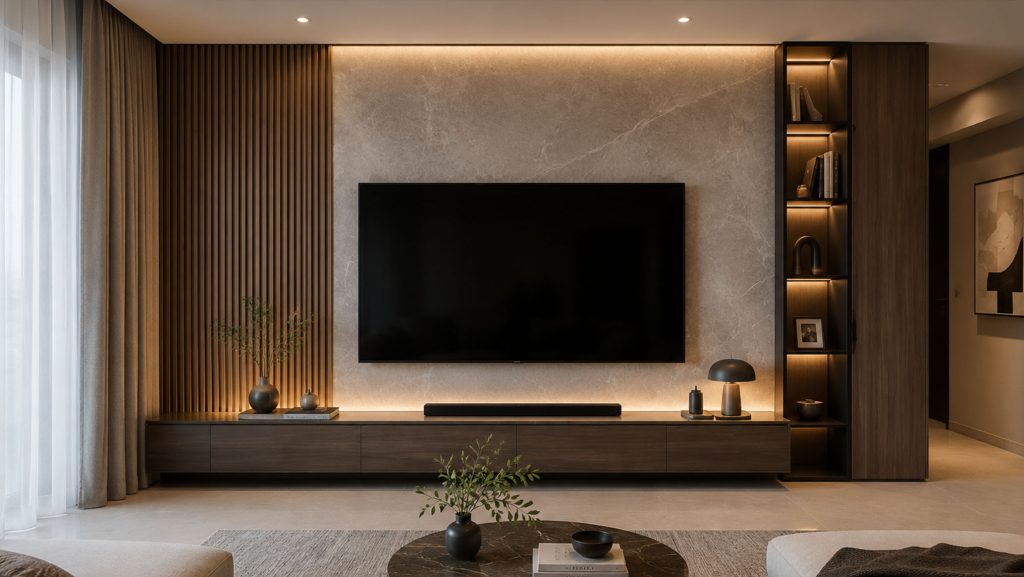
The modern interior design standard now requires a feature wall which will transform any space. Singaporean homeowners in 2026 will advance to backdrops which showcase their personal style and social standing and architectural design after mounting basic screens. Singaporean interior designers now use textured wall surfaces which include fluted and curved panel designs as essential design elements now appearing in around 36% for their projects because these elements define the boundaries of interior space.
The blog contains luxury home materials and design planning methods and lighting design solutions and design methods for residential spaces and penthouses and business environments. The document also provides solutions for typical problems together with a compilation of frequently asked questions.
Update Your Living Room’s Focal Point in 2026
The lounge acts as a focal point in lots of homes in Singapore, and television has become part of the overall structure of modern luxury homes. Homeowners now prefer minimalistic designs which create peaceful atmospheres for their living spaces while displaying their entertainment equipment because they want to achieve identical design outcomes during their entertainment activities.
Luxury home environments now require a TV feature wall design which demonstrates design excellence through its construction and creates a luxurious atmosphere throughout the entire room.
The TV wall area appears central to the space because it undergoes a complete visual transformation.
What Is The Importance Of TV Wall Design For Living Room Spaces?
Singaporean space exists as a highly valuable resource. The layout design in Good Class Bungalows and penthouses and larger condominiums directly affects the layout design which determines both space efficiency and user comfort during navigation.
A carefully planned TV feature wall design offers several advantages in this context:
1.Visual structure in open-plan layouts
Open living-dining areas have become standard design elements in several high-end residential projects. The space contains a central feature wall which functions as both a focal point and a spatial boundary without creating physical barriers.
2.Concealed storage for clutter-free living
The built-in cabinetry can store media devices along with routers and accessories while keeping a clean and sophisticated appearance.
3.Higher perceived property value
Show units and resale listings achieve their best visual results through custom feature walls which create a strong emotional connection with potential buyers.
All hospitality venues such as executive lounges and boutique hotels use the same design principles which apply to their special design needs. The complete guest experience becomes enhanced through the design of a curated backdrop which surrounds the displayed screen.
Material selection establishes material importance through its capacity to shape material personality together with its power to create an atmosphere of sophistication.
Learn More : Modern Scandinavian Interior Design: A 2026 Guide
Which Materials Define High-End Appeal?
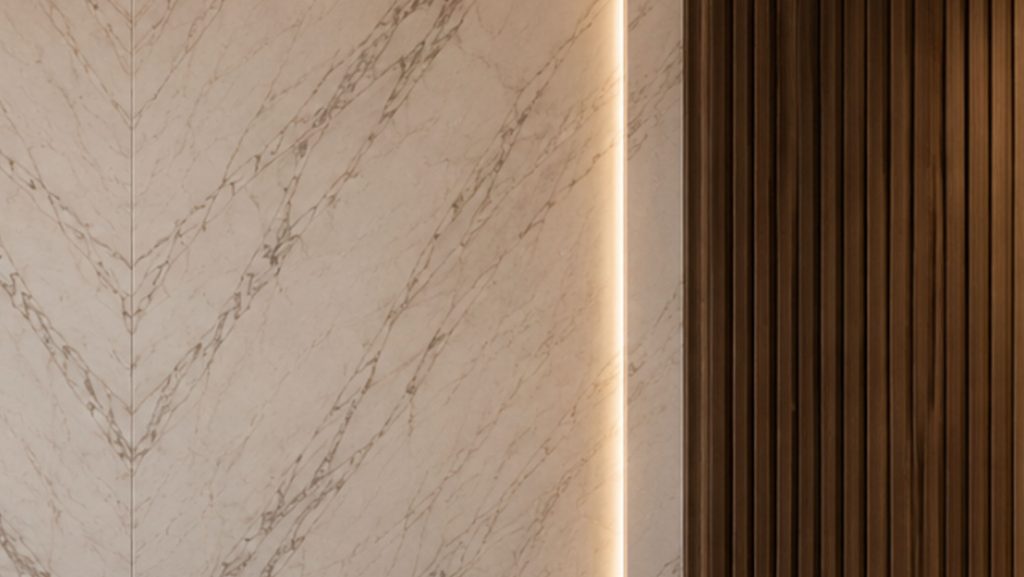
The selection of materials establishes the design identity for the TV feature wall. The design aesthetic of 2026 emphasizes tactile surfaces which include soft visual contrasts over theatrical visual designs.
1. Natural Stone and Marble
Luxury condominiums continue to use marble slabs which feature delicate veining patterns as a popular material choice. The combination creates visual depth through its ability to complement hidden LED lights. Architects use book-matched stone panels to design sculptural elements which are mainly used in penthouses and villas.
2. Fluted Wood Panels
The space receives texture through vertical fluting which adds texture to the design. The Singaporean humid climate makes engineered timber and high-quality wood grain laminate finishes the best building material choices.
3. Large-Format Porcelain
The porcelain panels mimic stone appearance while providing long-lasting performance and simple cleaning requirements. The material works well for homes with children and for areas that experience heavy foot traffic in commercial spaces.
4. Metal Accents
Brushed brass trim and dark steel inlays create an understated contrast on the mantle. The decoration provides a tailored appearance for television displays as it can help outline the television screen.
When selecting materials, the scale and proportion are much more important than the variety. Extremely complicated designs of products tend to become outdated after their first introduction. TV feature wall designs exist today through modern design elements which create dedicated visual focus areas, whereas traditional designs include decorative components for display purposes.
The design process requires three components which include material selection and layout design and functional design.
How to Plan the Layout? Proportion, Lighting, and Technology
The wall’s visual harmony depends on its layout design which extends beyond its choice of materials.
1. Proportion and Screen Placement
The television should be positioned at the height that people find most comfortable for watching television programs. The common Singaporean home design requires that the television screen be installed at a height between 1 and 1.1 meters from the ground based on how tall the seating area is.
The wall needs to have a width that exceeds the television’s width by an adequate distance. The screen needs this space to avoid giving the impression of being too large or too small for the room.
2. Concealed Wiring and Equipment
The method of professional carpentry enables workers to install electrical wires through paneling systems. Sound systems and gaming consoles can be stored inside spaces which include ventilation features.
3. Integrated Lighting
The illumination system creates multiple light levels which produce spatial depth through three distinct lighting sources:
- Cove lighting above the panel
- Backlighting behind the screen
- Spotlights which illuminate textured surfaces
You require soft indirect lighting because it provides comfort while maintaining the beauty of your home. The light creates glare which makes guests uncomfortable and reduces the aesthetic appeal of the area.
The process of designing a TV feature wall requires collaboration among different fields to achieve optimal results. The interior designer, electrician, and carpenter must work together during the early renovation phase to create a unified design for the final result.
The local renovation project shows how these concepts become real.
TV Feature Wall Makeover in Toa Payoh, Singapore
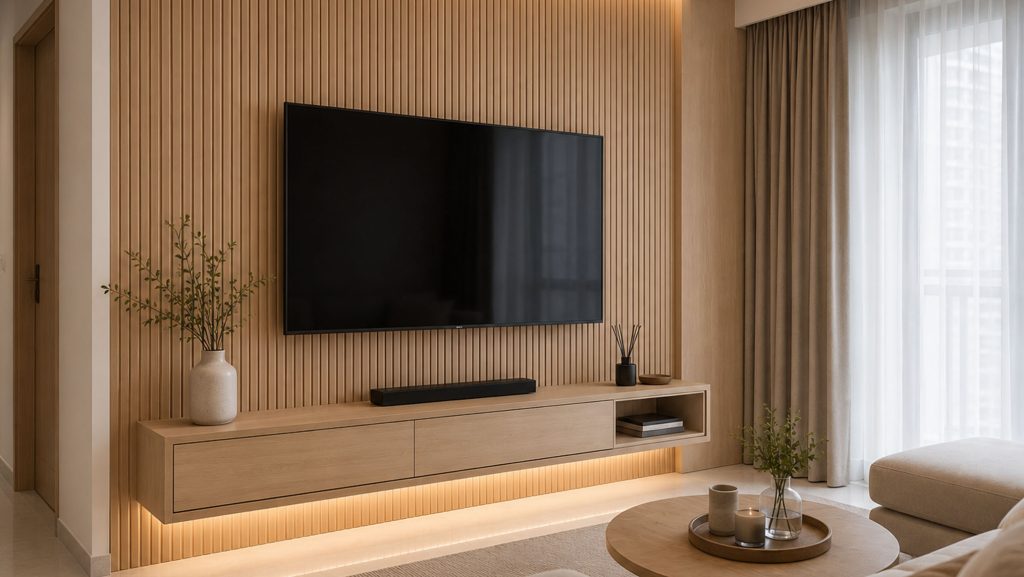
A narrow living room in a Toa Payoh flat received a renovation which included a narrow space-friendlier design with its slimline floating TV console and vertical wood-panel feature wall. The design used lighter timber tones and a floating console just 20 cm deep to keep the floor area open while making the TV wall a focal point.
The approach created both practical storage and space expansion through its design of warm textured elements which replaced heavy furniture items.
Design elements included:
- The design used vertical wood panels to create an upward visual effect which makes the ceiling space look taller.
- The floating console unit functions to maintain floor space because it prevents clutter from accumulating.
- The lighter wood tones will reflect light which makes them suitable for cramped Singaporean living spaces.
The case study shows how material choices and their arrangement patterns result in two functional purposes for TV feature walls: they create both visually appealing designs and practical functions. The design trend continues to be popular through 2026 for residential interior spaces.
The case study shows how material choices and their arrangement patterns result in two functional purposes for TV feature walls: they create both visually appealing designs and practical functions. The design trend continues to be popular through 2026 for residential interior spaces.
The planning process presents practical challenges which arise during the planning phase when you attempt to follow your inspirational guide.
What are the Common Concerns Homeowners Have?
Homeowners frequently express three main concerns regarding their properties. Homeowners want to know about practical matters related to feature walls before they install one. Here are a few common concerns in Singapore.
1. “Will it make the room look smaller?”
The feature wall creates room depth through its thoughtful design. Light-toned materials and vertical lines and concealed storage create an expansive atmosphere.
2. “Is it too permanent?”
Some people think that built-in installations create permanent structures which restrict mobility. The reality is that modular carpentry allows for design updates through space changes and new material applications. Clients can switch out panels anytime they choose because it requires no structural demolition work.
3. “Does it suit minimalist interiors?”
Yes. A minimalist approach often benefits from one defined focal point. The space achieves simplicity through its clean lines and handle-less cabinetry and muted tones.
The commercial sector in Singapore requires clients to consider both product durability and maintenance requirements. Selecting scratch-resistant finishes and planning for accessible service panels helps address these issues.
Conclusion
The living room space in 2026 has evolved from its original purpose of television viewing to become a space which reflects your personal style and principles through its design. The design of the TV feature wall adds structural integrity, texture and a level of sophisticated simplicity, redefining the room as such.
The decision made by affluent homeowners and developers in Singapore goes beyond aesthetics. The home design elements will determine whether people perceive their residence as a comfortable space for daily use and prolonged time. The choice of materials and their finishing methods will determine how the completed product will be perceived by others.
The collaboration between an expert company and your project team creates a better process for crafting exceptional TV feature wall designs. MJS Interior has over 20 years of renovating homes in Singapore, is accredited by CaseTrust-RCMA and has an excellent track record across all types of projects, both residential and commercial.
The complete project process starts with an initial consultation meeting which develops into a professional 3D design preview that guides direct project delivery with precise installation processes through expert communication and craftsmanship at every step of the project.
Contact MJS Interior to arrange an appointment to discuss your room upgrade at their showroom at Blk 844 Sims Ave #01-704 (S400844), opposite Eunos MRT, call +65 6742 1221 / +65 6266 1221, or email [email protected] today.
FAQs

Q1.What is the ideal size for a TV feature wall design in Singapore apartments?
The feature wall dimensions require room width and seating distance measurements to establish their correct size. The feature wall needs to extend at least 300 to 600 millimeters from the television on both sides according to this guideline. Full-width panels establish an even appearance for bigger living areas because they stretch across the complete width of the room.
Q2.How much does a TV feature wall design typically cost in Singapore?
The cost of a project depends on the materials used and the difficulty of the work. Basic laminate finishes may start from a few thousand dollars while marble or large-format porcelain installations in luxury homes can go much higher. The budget depends on two factors which are custom carpentry expenses and integrated lighting costs.
Q3.Can a TV feature wall work in commercial spaces?
Commercial areas can make use of TV feature walls according to your statement. Upscale offices and restaurants and hospitality venues in Singapore use feature walls as design elements for their lounge areas and waiting rooms. The design approach usually prioritises creating durable elements which will maintain brand identity throughout the space.
Q4.Is a TV feature wall suitable for small HDB flats?
The answer depends on the design proportions which need to be planned in detail. The space maintains open areas through slim panels and lighter finishes and minimal cabinetry which also creates a central design element.