

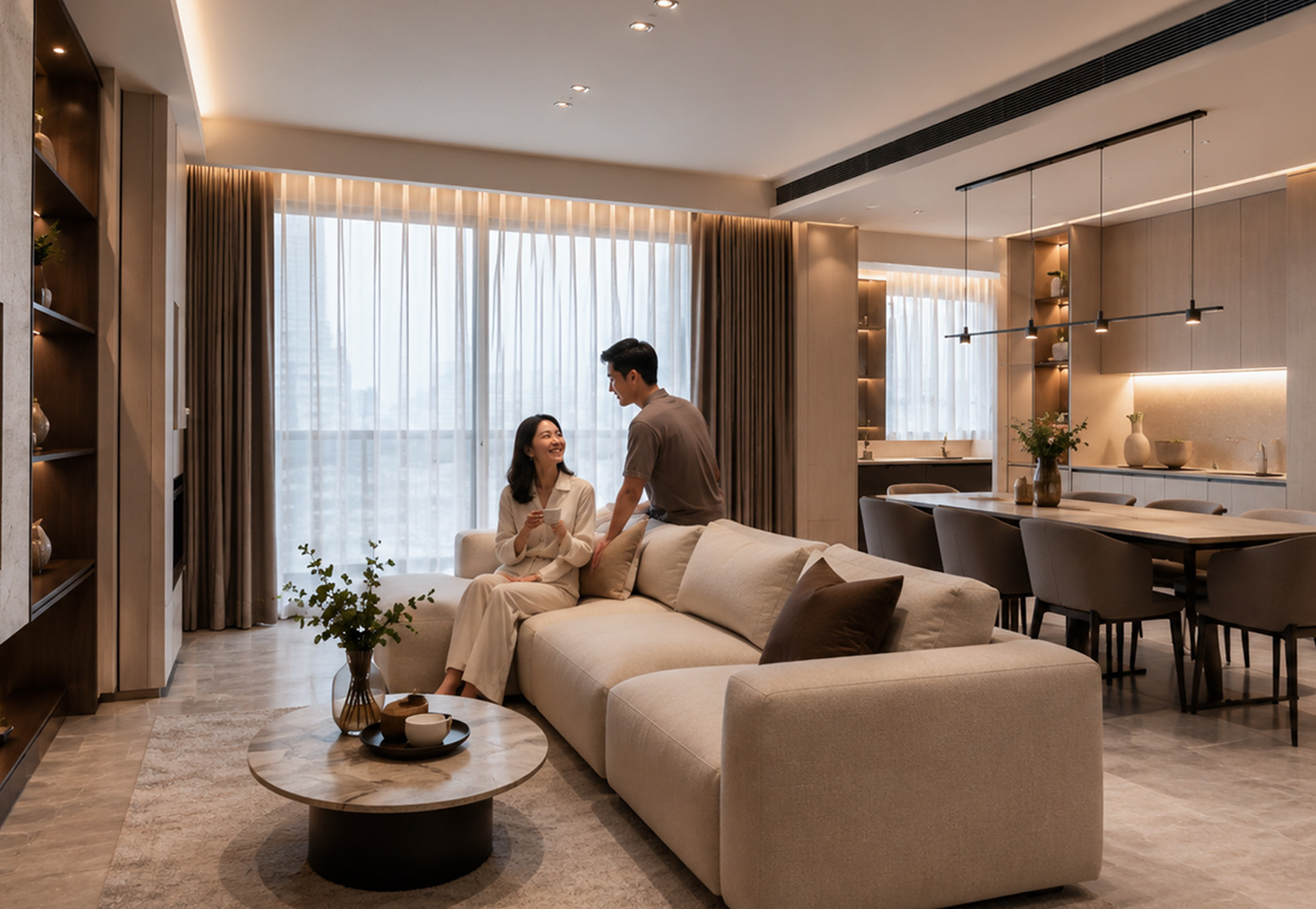
The Interior Design Details That Make a Home Feel More Expensive
Key Takeaways
- The best luxury interior design ideas Singapore homeowners can apply are not about budget. They are about precision in detail.
- Consistent hardware finishes, flush joinery, and considered lighting do more than any single expensive material.
- A home feels premium when nothing in it draws attention for the wrong reason.
- Texture, layer, and restraint are the three principles that separate a designed room from a furnished one.
- MJS Interior has over 20 years of experience translating these details into real Singapore homes, across HDB flats, condos, and landed properties.
Introduction
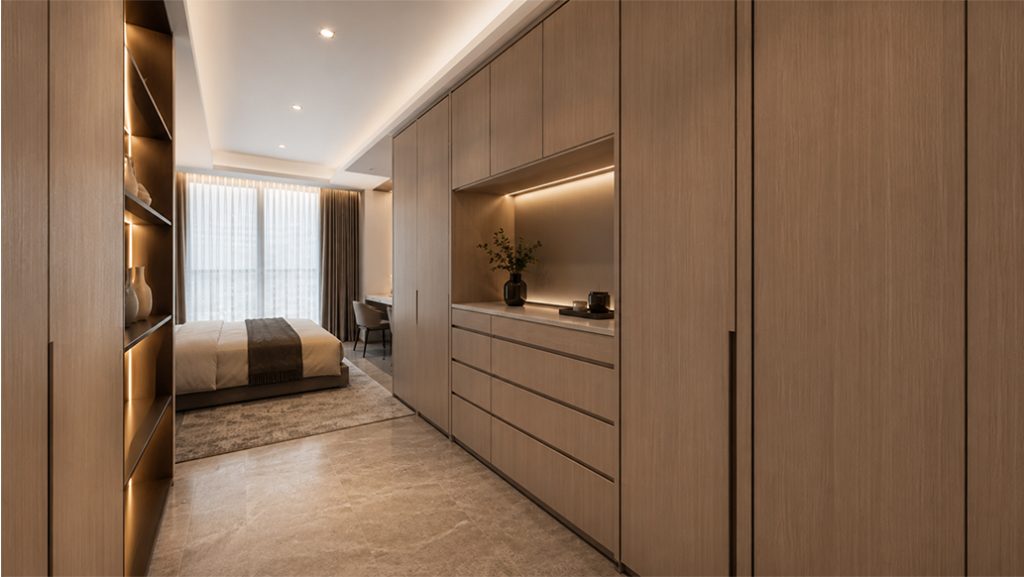
The first assumption about expensive-looking homes that have modern interior design in Singapore is based on how much money was poured into them. Going around a sufficient number of beautifully designed flats makes one rethink. The statistics provided by Qanvast showed that the average price of resale HDB renovations ranged from S$53,300 in places such as Punggol to up to S$78,500 in Pasir Ris, while premium-looking flats are characterised not by money spent on them but by detailing, consistency of finish and spatial planning solutions.
It is the control of the house that makes it look expensive. The hardware fits. The joinery fits the wall perfectly. The lighting does not flatten out the room. No details make one think that it was something added later without much thought. All these solutions are matters of decisions, not money spent, and can be afforded for almost any budget if one knows what to pay attention to.
This blog will go through all the details that mark a quality interior in a Singapore flat, those that are immediately noticeable to designers but ignored by homeowners.
Luxury Interior Design Ideas in Singapore
Luxury interior design ideas in Singapore mean all the ideas for designing, materials used, and finishes selected, which create a premium quality in a home interior without always involving a premium cost.
All these ideas revolve around creating coherence, finish accuracy, and no design noise. For one to achieve an expensive-looking space, their eye must travel across it without any distraction. This is brought about by decisions regarding hardware, joinery, and lighting.
Hardware: The Detail Most Homeowners Overlook
Fittings in the kitchen can be of good quality by themselves, but the kitchen as a whole might not have coherence because of inconsistencies in finishes. In most cases, people who are renovating their kitchens focus on larger issues like countertops and floors.
For example:
- Matte black cabinet pulls
- A brushed silver tap
- A champagne gold paper holder
- A chrome towel ring
While each item could function nicely by itself, taken together, they create visual distractions that detract from the cohesiveness of the room. These are things that the eye sees right away and the homeowner may not recognise consciously.
Hardware is one of the least expensive improvements you can make in your house, and perhaps one of the least thought about during remodeling. A simple metal finish provides visual harmony to the whole interior space.
Examples include:
- Brushed brass for warm-toned kitchens and bathrooms
- Matte black for white joinery and concrete-look finishes
- Brushed nickel for cooler and more restrained palettes
The selected finish should appear consistently across:
- Cabinet handles
- Tap fittings
- Towel rails
- Light switch plates
- Door hinges
Such coordination does not demand any significant investment. The cost of a complete set of compatible drawer pulls is considerably lower compared to more serious renovations, like the installation of new cabinets or the re-spraying of old ones, but it makes a significant impact on the premium feel of the house.
Homeowners often forget about that while planning their renovations and install different metal finishes in one room through various contractors and suppliers. Such an outcome seems disorganised, even if they have invested considerable sums into other elements.
The solution is straightforward:
- Select one hardware finish before renovation sourcing begins.
- Keep the finish consistent throughout the space.
- Inform all contractors and suppliers of the selected finish before purchases are made.
A home feels expensive not because one feature dominates attention, but because nothing feels visually inconsistent or unresolved.
Joinery: Where Premium Homes Separate Themselves?
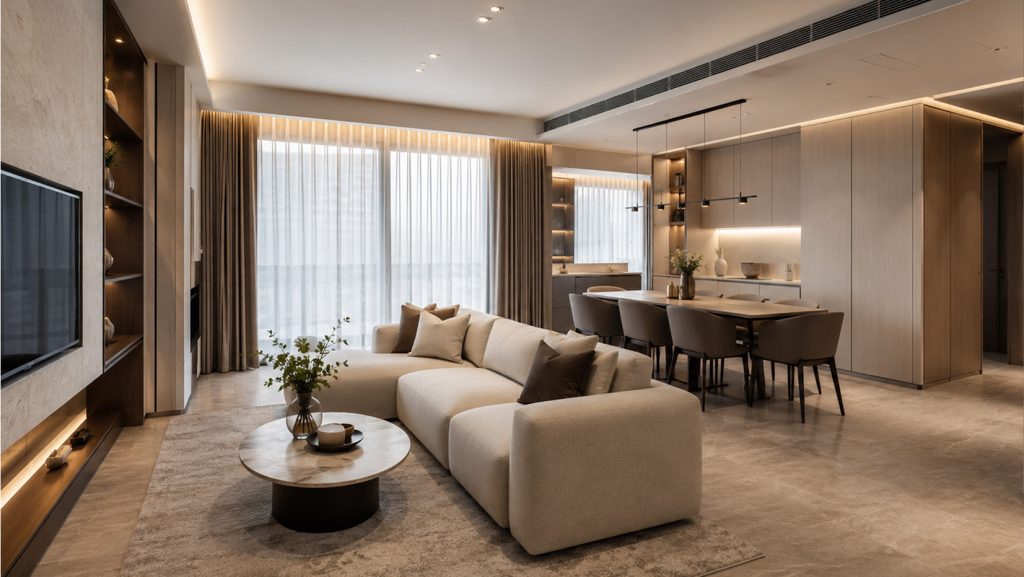
What distinguishes an ordinary renovation from an exquisite one can be seen in minute construction details. While homeowners concentrate on materials and furnishings, designers pay attention to joints, edges, spacing, and alignment.
Questions such as these determine how refined a space feels:
- Where does the cabinetry meet the ceiling?
- Does the joinery sit flush against the wall?
- Are the gaps even throughout?
- Do drawer faces align perfectly?
These details reflect the quality of fabrication and installation.
One of the best examples would be floor-to-ceiling cabinetry. In a high-end home renovation, full-height cabinetry almost invariably looks better than cabinet work that does not reach the ceiling.
A wardrobe ending 30cm below the ceiling creates:
- A visible ledge that collects dust
- A visual break across the wall
- A fragmented appearance within the room
The same wardrobe, extended fully to the ceiling, reads as part of the architecture rather than standalone furniture. The wall feels cleaner, taller, and more visually complete.
Handleless cabinetry creates another layer of visual calm. Popular options include:
- Push-to-open systems
- Recessed finger pulls
These remove the horizontal visual interruptions created by standard cabinet handles. The result is a flatter and more continuous cabinet surface that often appears more expensive than it really is. This detail is widely used in modern interior design Singapore projects and is now available across many mid-range renovation budgets.
Another important joinery detail is the shadow gap. A shadow gap refers to:
- A small and consistent reveal
- Usually between 3mm and 5mm
- Positioned between the cabinet frame and door face
Consistent shadow gaps signal precision and careful workmanship. Uneven gaps or missing reveals usually indicate rushed fabrication or installation.
Many standard contractors skip this detailing, while experienced designers specify it deliberately. Asking about shadow gap detailing during quotation reviews is often a reliable way to distinguish careful fabricators from faster, less detail-focused contractors.
Panel alignment matters in the same way.
- Drawer faces should remain level
- Spacing should appear even throughout
- Cabinet lines should continue consistently across the joinery run
Most homeowners may not consciously identify these details, but the eye immediately reads them as either quality or inconsistency.
For homeowners comparing renovation approaches across different property types, these same joinery principles apply across HDB flats, condominiums, and larger residential projects alike.
Texture Over Pattern: How Premium Rooms Handle Surface Interest?
Expensively styled rooms rarely use bold patterns. Texture is preferred in such instances. This is because a pattern is an expression that tends to become outdated easily and also creates controversy among people. Texture is a feature that speaks softly yet builds on itself.
The whitewashed walls, the fluted door panel, the bouclé cushion on a linen sofa, and the natural stone slab in the kitchen countertop. All these surfaces are deep, yet they do not make a visual statement. When combined, they create a room that takes photos perfectly and has layers too.
In Singapore, the materials that achieve this most reliably in a premium home renovation are:
- Microcement and limewash on feature walls, for a finish that changes slightly with light and avoids the flat look of standard paint.
- Fluted or reeded panels on cabinetry, islands, and TV walls, for a shadow line that adds depth without complexity.
- Large-format stone-look slabs for kitchen counters and bathroom walls, where the continuous vein avoids the grid of grout lines that makes smaller tiles read as budget.
- Warm wood veneers and laminates in a single consistent tone across the main cabinetry run.
In regard to texture for a small Singapore flat, the discipline is that of moderation. Having only one textural anchor for each space is what works for the design. When two or three different textures clash within one room, they negate each other and defeat the purpose of using texture in the first place.
Lighting: The Fastest Route to a More Expensive Feel
Lighting has a bigger impact on changing the mood of the space compared to other interior elements. Indeed, many Singaporean houses do not lack light but layers of lighting. Having a 4000K LED ceiling panel is enough to have a well-lit space, but it tends to give a sterile feeling rather than a luxurious one.
Luxury interior design concepts in Singapore use three layers of lighting design. The three lighting layers include:
- Ambient lighting
- Warm cove lighting
- Pendant lights above dining tables
- Low-level wall sconces
- Task lighting
- Kitchen counter lighting
- Work desk lighting
- Bedside lighting
- Accent lighting
- Feature wall illumination
- Display shelf lighting
- Architectural detail highlighting
Each lighting layer serves a different purpose. Together, they create a room that feels softer, more dimensional, and visually controlled.
One of the most impactful lighting upgrades a homeowner can make without a full renovation is changing ambient lighting colour temperature from 4000K to 2700K.
This warmer lighting temperature:
- Reduces the clinical feel common in many living spaces
- Creates a calmer and more settled atmosphere
- Produces the warm tone often associated with hotel lobbies, serviced apartments, and showflats
The lighting temperature matters more than the fixture cost itself. An affordable downlight at 2700K often produces a more premium result than an expensive designer fixture installed at 5000K.
Homes that photograph well usually share similar lighting characteristics:
- Minimal dependence on harsh overhead lighting
- Warm ambient lighting layers
- Accent lighting directed toward focal points within the room
Good lighting does not simply make a room brighter. It makes the room feel intentional, balanced, and carefully designed.
Curtains and Flooring: The Two Elements That Define Scale
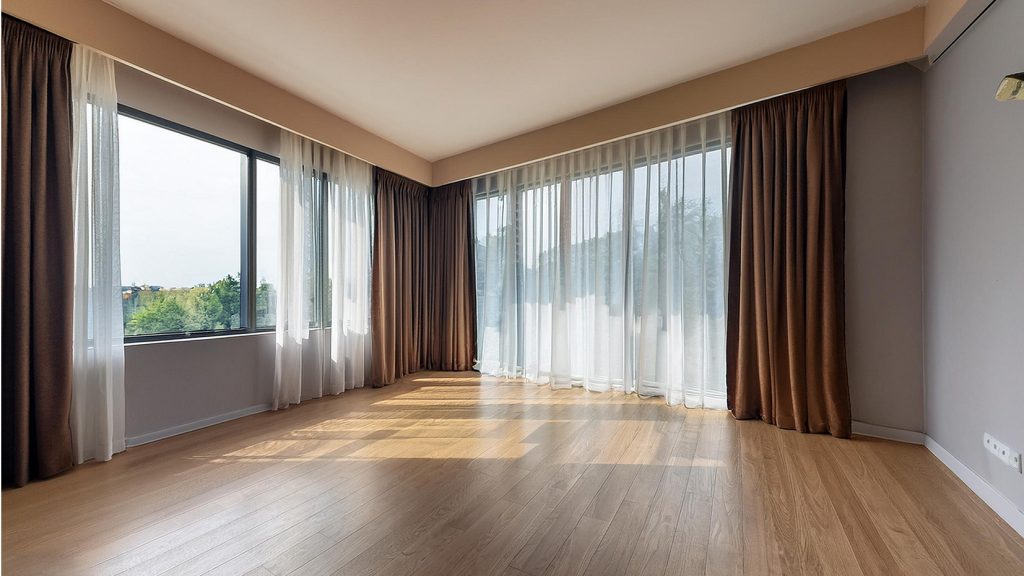
Curtains and flooring occupy more visual space in a room than almost any other interior element. Despite this, many homeowners treat them as secondary finishing decisions rather than major contributors to how large or refined a space feels.
Curtain height and length have a direct effect on spatial perception. Short curtains often create an unfinished appearance because they:
- Visually cut the wall in half
- Make ceilings appear lower
- Reduce the sense of openness within the room
Floor-to-ceiling curtains produce the opposite effect. For the best visual result:
- Curtains should extend fully to the floor
- Curtain tracks or rods should be installed around 10cm above the actual ceiling line
- The full curtain drop should remain uninterrupted
This technique helps to elongate the wall height, making the room look higher and larger in size. In a typical Singaporean house, which usually has ceilings at 2.7 to 2.9 metres high, one can completely alter the ambience of a room using just this one technique.
One doesn’t necessarily have to use expensive fabric for it to achieve a good result. Heavier linen or polyester in neutral colours can provide the same elegance as the designer fabrics used when hung at the proper height.
This is also the case with flooring. Using one flooring material continuously across the living area and dining area creates the impression of a larger and more coherent space. Interrupting flooring breaks the visual flow and fragments the perceived floor area with:
- Tile thresholds
- Material changes between rooms
- Contrasting floor finishes
Large porcelain tiles and wide vinyl floorboards with warm tones are used in Singapore’s current interior design trend as they help in maintaining visual cohesion while still being functional for daily use at home.
In the case of Scandinavian inspired interior design in Singapore, this principle of continuity of materials is often employed.
Do Luxury Interior Design Ideas in Singapore Work in an HDB Flat?
Indeed. All the considerations mentioned above apply not only to a 3-room BTO but also to a landed property. Consistency in hardware choices, flush joints, layered lighting, and materials, all this is decided on the brief and specifications level of renovation.
It also costs virtually nothing and gives a great deal, no matter how big the flat is. The thing that makes an HDB luxurious or not has little to do with its area. It’s rather about whether the detailed choices were made prior to the renovation or not.
FAQs
Q1. Which are the best luxury interior design concepts that homeowners in Singapore can use?
The concepts that give the best results include hardware consistency, full-height joinery, warm layering of lights, and consistent flooring materials in the living spaces of the house. All these are planning considerations which are free at almost no additional cost if included in the renovation plan at the beginning.
Q2. Should a luxury house renovation be very expensive?
Not necessarily. The luxury elements in any home may include shadow gaps, hardware consistency, colour temperature consideration, and correct hanging height of the curtains. All these require precision in specification and not expensive materials.
Q3. Which materials can be used to make the interior of a Singapore home luxurious?
The materials that work best to achieve this effect include microcement or limewash on feature walls, stone-like porcelain in large format, fluted cabinet faces, and warm wooden laminates in one consistent colour.
Q4. What is the importance of lighting in making your home look luxurious?
Lighting has the greatest transforming power in interior design, whatever your budget might be. Changing from 4000K ambient circuits to 2700K, and including low-level lighting of at least one layer, be it cove, pendant or floor lamp, transforms any room no matter what else it contains.
Q5. How can I find a designer who will attend to these luxury finishes?
The attention to this aspect should be reflected through their joints where cabinets meet ceilings and walls. This will determine whether the company values the quality of the finishes or not. MJS Interior provides residential design and renovation services where the entire design and build process can be done for you by a company that has been providing this finish in Singaporean residences for over two decades.
Conclusion
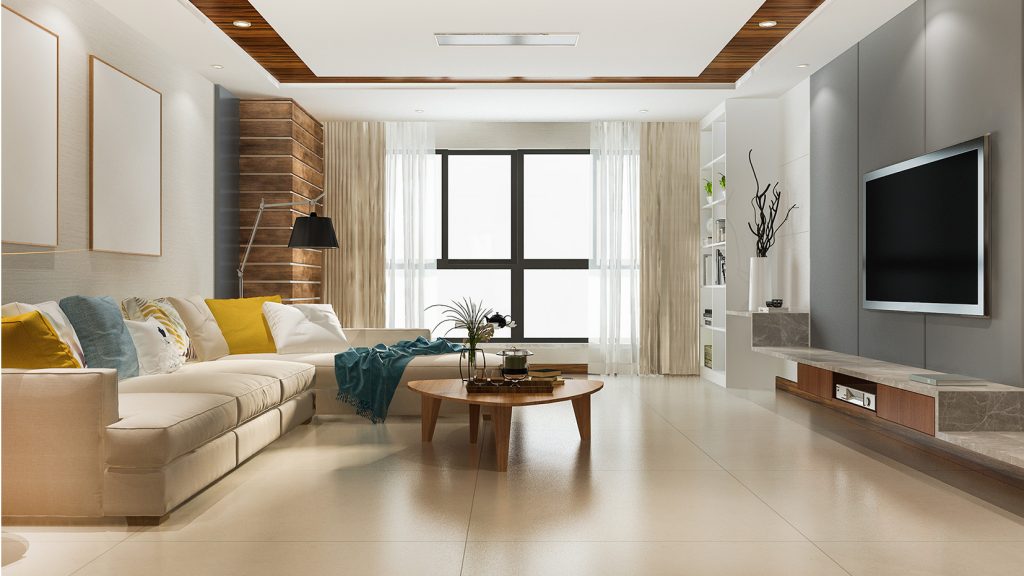
It is an expensive place where everything seems to have been done perfectly. There is no hardware that does not match; no joinery that protrudes from the wall; no lighting that is too cold; no curtains that don’t touch the floor; and no flooring that has any visible breaks. None of this needs lots of money spent on renovations. It needs the right decisions made at the right time during the renovation process.
MJS Interior is a well-accredited interior design firm based in Singapore with more than 20 years of experience in the Singapore interior design and renovation business, delivering perfect combinations of aesthetic beauty and functional convenience.
This includes everything from proportioning through to spatial planning, joinery up to full height, layering lighting up to finishes coordination. As for homeowners looking for luxury interior design ideas in Singapore, they might also look at the blog of MJS Interior, where there are living room interior design ideas.
It focuses on layout, finishes, and furniture proportion within Singapore homes. In case of any renovation from start to completion, MJS Interior provides interior design and renovation services based on residential renovation experience over two decades in Singapore. People looking for a premium home renovation may contact here.