

Statement Lighting Ideas That Make Singapore Homes Feel More Designed
Key Takeaway
- Statement lighting design is one of the highest-impact changes a Singapore homeowner can make, affecting how a space looks, feels, and functions across a full day.
- A single overhead LED panel is the most common and most limiting lighting choice in Singapore homes. Layering changes everything.
- Colour temperature is the variable most homeowners underestimate. Warm light at 2700K feels calm and residential. Cool light at 4000K feels institutional.
- Home lighting ideas that work in Singapore account for low ceiling heights, limited natural light, and the need to shift between work and rest modes within the same room.
- MJS Interior plans lighting as part of the renovation brief, not as an afterthought, because rewiring and switching after the walls close costs significantly more than doing it right the first time.
Introduction
Most Singapore homes are underlit in the ways that matter and overlit in the ways that don’t. A single LED panel floods the living room from the centre of the ceiling. The light is bright. The room is flat. Nothing stands out, and nothing disappears. The space functions, but it doesn’t feel designed.
Thoughtful lighting changes the relationship between a room and its light. A pendant over the dining table does something a ceiling panel never can: it places light at human height, creates a pool of warmth around the table, and gives the eye a point of rest within the room. The effect is immediate. The room reads differently even before any furniture changes.
This blog works through what statement lighting actually involves in a Singapore home, which fixture types and placements work for different rooms, and how to plan lighting before renovation so the electrical work is done once and done right.
What Is Statement Lighting Design?
Statement lighting design refers to the deliberate use of lighting fixtures as visible design elements within a room, rather than treating light sources as purely functional. A statement fixture draws the eye, anchors a zone, and contributes to the room’s character whether the light is switched on or off.
In practice, this means moving away from a single recessed panel as the sole light source and instead layering ambient, task, and accent lighting, with one or two visible fixtures, proportionate to the room, and chosen for how they look as objects. The fixture itself, its material, form, and scale, is part of the design decision.
Why Lighting Is the Most Underused Design Tool in Singapore Homes
Most Singapore HDB flats receive their lighting in the same way: a developer or previous owner installs a single ceiling light in the centre of each room, typically a cool white LED panel, and that setup remains unchanged through multiple renovations.
The result is a home that’s technically lit but never warm. The ceiling panel works. But it casts light in one direction only, downward and outward from the centre, which flattens every surface below it. Shadows collect at the edges. Furniture loses depth. The room looks smaller and more institutional than it needs to.
Research on warm and cool white light confirms that cool white lighting at higher colour temperatures increases measurable tension and reduces reported calmness compared to warm white lighting in the same environment. In residential settings, this difference is felt before it’s noticed. A living room at 4000K (cool white) and the same room at 2700K (warm white) are measurably different in how comfortable they feel to spend time in.
The fix isn’t expensive. It requires planning at the right stage of a renovation. Interior lighting Singapore projects that include a layered lighting plan from the brief stage cost no more than those that don’t, because the electrical work is completed once rather than retrofitted later.
As MJS Interior notes in its HDB to condo renovation guide, layering ceiling lights with pendant fixtures and hidden LEDs creates mood and directs attention in ways that a single ceiling source never achieves.
Light does not just illuminate a room. It determines which version of that room you see.
Statement Lighting Ideas by Room

The Dining Area: Where a Pendant Earns Its Place
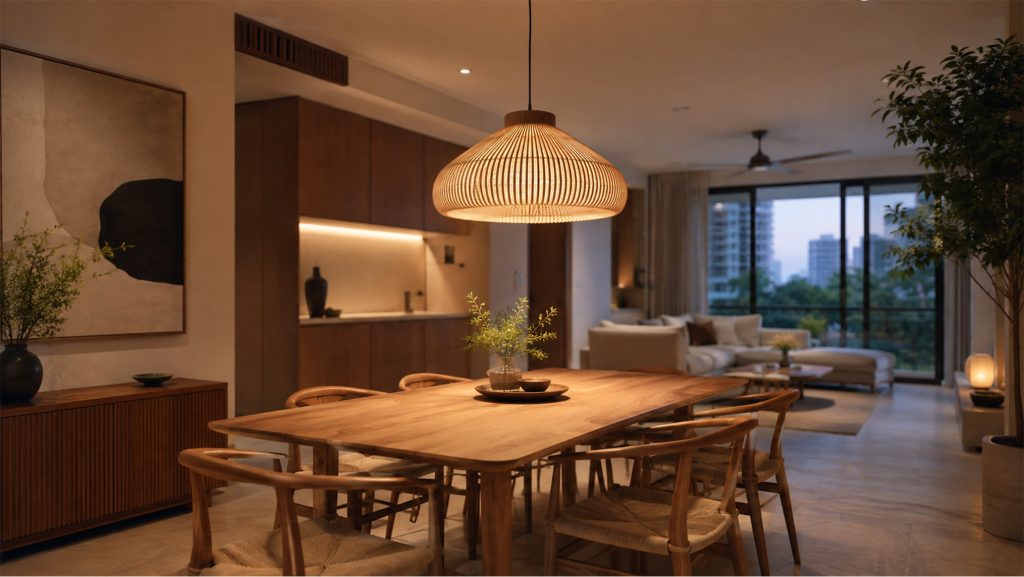
The dining table is the single best location for a statement pendant in a Singapore home. A pendant hung 70 to 80 centimetres above the table surface places light at exactly the height where it becomes atmospheric rather than functional. It creates a pool of warmth around the table that separates the dining zone from the rest of the open-plan living area, which in most Singapore flats shares space with the living room.
The pendant’s scale matters. A fitting that’s too small will look like a decorative afterthought. The pendant diameter should be roughly half the table width for a round table, or span about two-thirds of the table length for a rectangular one. A 90 to 100 cm diameter pendant over a standard 6-seater Singapore dining table is a reliable starting point.
Material direction follows the home’s broader palette. Rattan or woven pendants suit Japandi and warm minimalist interiors. Aged brass or black iron work in industrial and modern classic directions. Frosted glass pendants suit cooler, more restrained palettes. All of these read as design decisions rather than utility choices, which is what makes them statement fixtures.
The Living Room: Layer First, Statement Second
In a living room, layered lighting works best as a considered exercise rather than a single fixture. The goal is to give the room at least three light sources at different heights: an ambient source (ceiling cove lighting, a floor lamp, or a low pendant), a task source (reading lamp, table lamp), and an accent source (LED strip behind a TV panel or under a shelf).
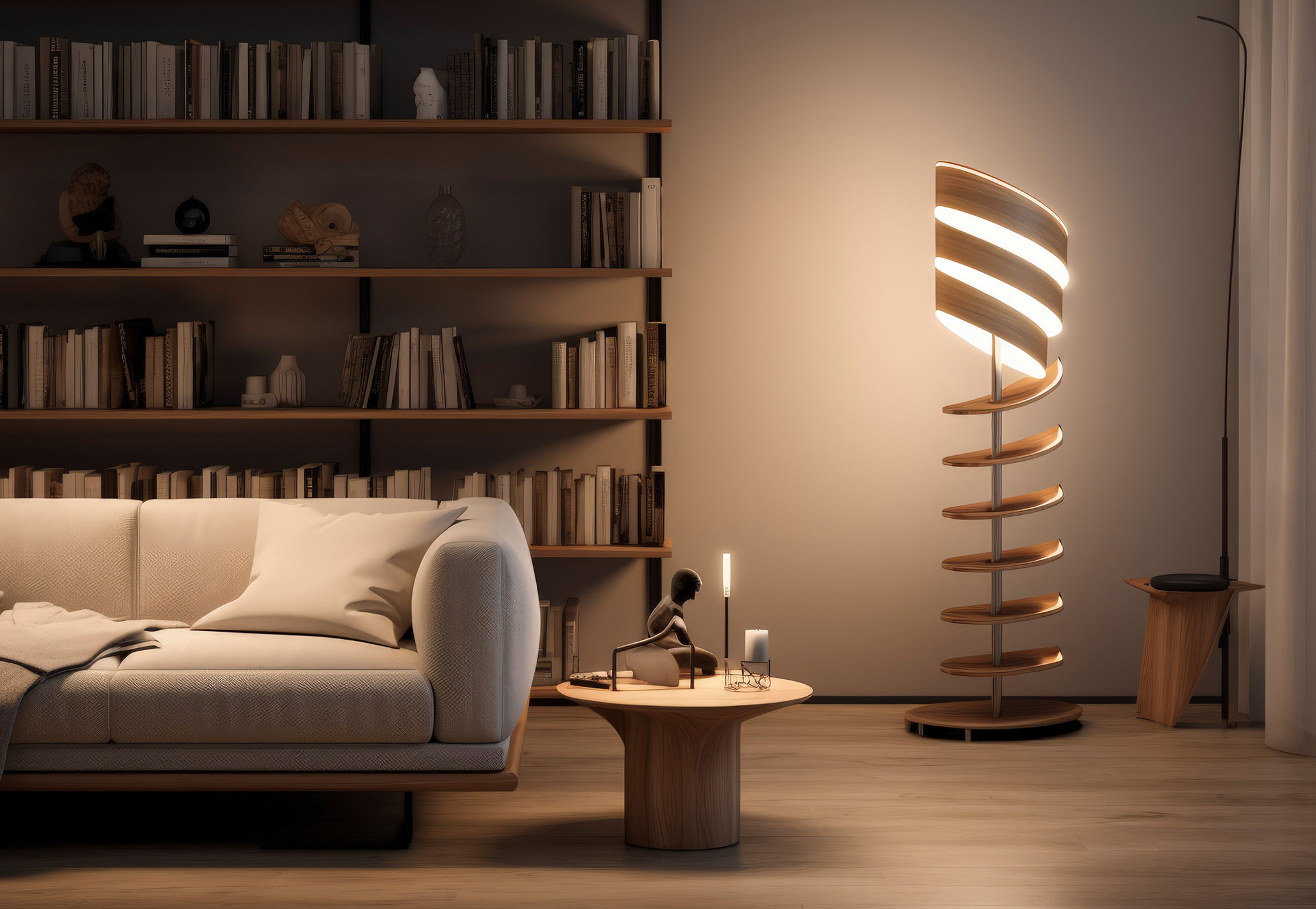
A floor lamp with a sculptural base reads as furniture and as light simultaneously. Placed beside a sofa or in a corner opposite the main light source, it fills the room’s edges and removes the flat quality that a single overhead fixture creates. This is one of the most affordable home lighting ideas because it requires no electrical work, just a power point in the right location.
For homeowners who want a pendant in the living room, a cluster of small pendants at varying heights over a coffee table or reading zone works better than a single large chandelier, which can feel heavy in Singapore’s standard 2.7-metre ceiling height.
The Bedroom: Bedside Wall Lights Over Ceiling Panels
The bedroom ceiling panel is the least necessary fixture in a Singapore home. Bedrooms benefit most from bedside light placed at eye level rather than overhead. Wall-mounted reading lights positioned 40 to 50 centimetres above pillow height direct light where it’s needed, reduce glare, and remove the ceiling-to-floor wash that makes a bedroom feel bright rather than restful.
A pendant beside the bed in place of a table lamp is another option that works in rooms with sufficient ceiling height. It frees up the bedside table surface and reads as a design choice rather than a utility decision.
The Scandinavian approach of using multiple low-level light sources in a bedroom, as explored in the MJS Interior guide to Scandinavian interior design, produces exactly this quality: a space that feels intentional and calm without relying on overhead brightness.
The Kitchen: Task Light as Statement
Singapore kitchen lighting is typically either too flat or too absent above the counter. Recessed downlights in the ceiling are common, but they rarely put light directly onto the work surface because the upper cabinetry blocks the angle. Under-cabinet LED strips solve this problem directly and cost very little to install during a kitchen renovation.
In open kitchens or kitchen islands, pendant lights above the counter serve both as task lighting and as a visual anchor for the zone. A pair of pendants hung 45 to 55 centimetres above an island surface is proportionate for most Singapore kitchen configurations. It brings the light source into the room rather than hiding it in the ceiling, which changes how the kitchen reads from the living area.
Planning Lighting Before the Renovation Starts
The most common lighting regret in Singapore homes isn’t the fixture. It’s the wiring. Homeowners who add a pendant after the renovation is complete either accept an exposed cable or pay for chasing and plastering to hide the new run. Both are avoidable if lighting positions are confirmed before the renovation walls are plastered.
A lighting plan should confirm: pendant drop points, wall light positions, switch locations (including dimmers), and LED strip runs before the electrician is engaged. This is a 30-minute conversation at the brief stage that saves high cost and disruption later.
Dimmable circuits deserve particular attention. A living room that functions as a workspace at noon and a relaxation space at 9 pm needs adjustable light levels for each function. Dimmable switches specified during renovation cost very little. Adding them after the walls close costs considerably more.
For a full picture of how MJS Interior integrates lighting decisions into the design and build process, the living room interior design guide covers how lighting planning connects to layout, furniture placement, and joinery specification in Singapore homes.
The right time to plan your lighting is before you choose your pendant. The wrong time is after the plasterer has left.
Does Your Singapore Home Need Better Lighting?
A thoughtful lighting approach suits any Singapore home where the current setup leaves rooms feeling flat, clinical, or lacking character. It doesn’t require a full renovation. A pendant over the dining table and a floor lamp in the living room corner can change how a home feels in an afternoon and at minimal cost. For homeowners planning a renovation, incorporating a full layered lighting plan before electrical work begins is the most cost-effective way to ensure the result holds up long after handover.
Frequently Asked Questions

1. What makes a lighting fixture a “statement” piece in a Singapore home?
Statement lighting design means using light fixtures as visible design elements rather than purely functional ones. In Singapore homes, this typically involves replacing single overhead panels with layered lighting that includes a pendant, wall lights, or floor lamps alongside recessed or cove lighting, creating depth and warmth rather than flat overhead brightness.
2. Which lighting fixtures work best in a Singapore HDB flat?
The most impactful changes for HDB flats are: a pendant over the dining table, bedside wall lights instead of a bedroom ceiling panel, under-cabinet LED strips in the kitchen, and a floor lamp in the living room to fill the room’s edges. These changes don’t require major electrical work if planned before renovation.
3. What colour temperature works best for home lighting in Singapore?
For living spaces, 2700K to 3000K warm white produces the most comfortable and residential quality. Reserve 4000K cool white for kitchens and bathrooms where task visibility matters more than atmosphere. Most Singapore homes default to 4000K throughout, which contributes to the clinical feel that many homeowners want to improve.
4. How high should a pendant light hang over a dining table?
70 to 80 centimetres above the table surface is the standard range for a pendant over a dining table in Singapore. This places the light at human height, creates an atmospheric pool of warmth around the table, and keeps the fixture out of sightlines when seated. Pendants hung too high lose their atmospheric effect and behave more like ceiling lights.
5. Does MJS Interior plan lighting as part of a renovation brief?
Yes. MJS Interior integrates lighting positions, switch locations, dimmer specifications, and LED strip runs into the renovation brief before electrical work begins. This ensures pendant drop points and wall light positions are confirmed before walls are plastered, which avoids the cost and disruption of retrofitting lighting after the renovation is complete. Explore MJS Interior’s interior design and renovation services to understand how the full process works.
Lighting changes how a room feels before it changes how it looks. A dining table with a well-chosen pendant above it feels like a dining room, not just a table in a flat. A living room with layered light at three different heights feels composed rather than functional. A bedroom with wall-mounted reading lights instead of an overhead panel feels like a considered space. None of these changes requires a complete renovation. They require lighting decisions made at the right stage and electrical work done before the walls are closed. For Singapore homeowners planning a renovation and wanting to get this right from the first consultation, MJS Interior’s approach to interior lighting Singapore starts with the brief, where the lighting plan, fixture positions, and dimmer circuits are all resolved before the first tile is laid.