

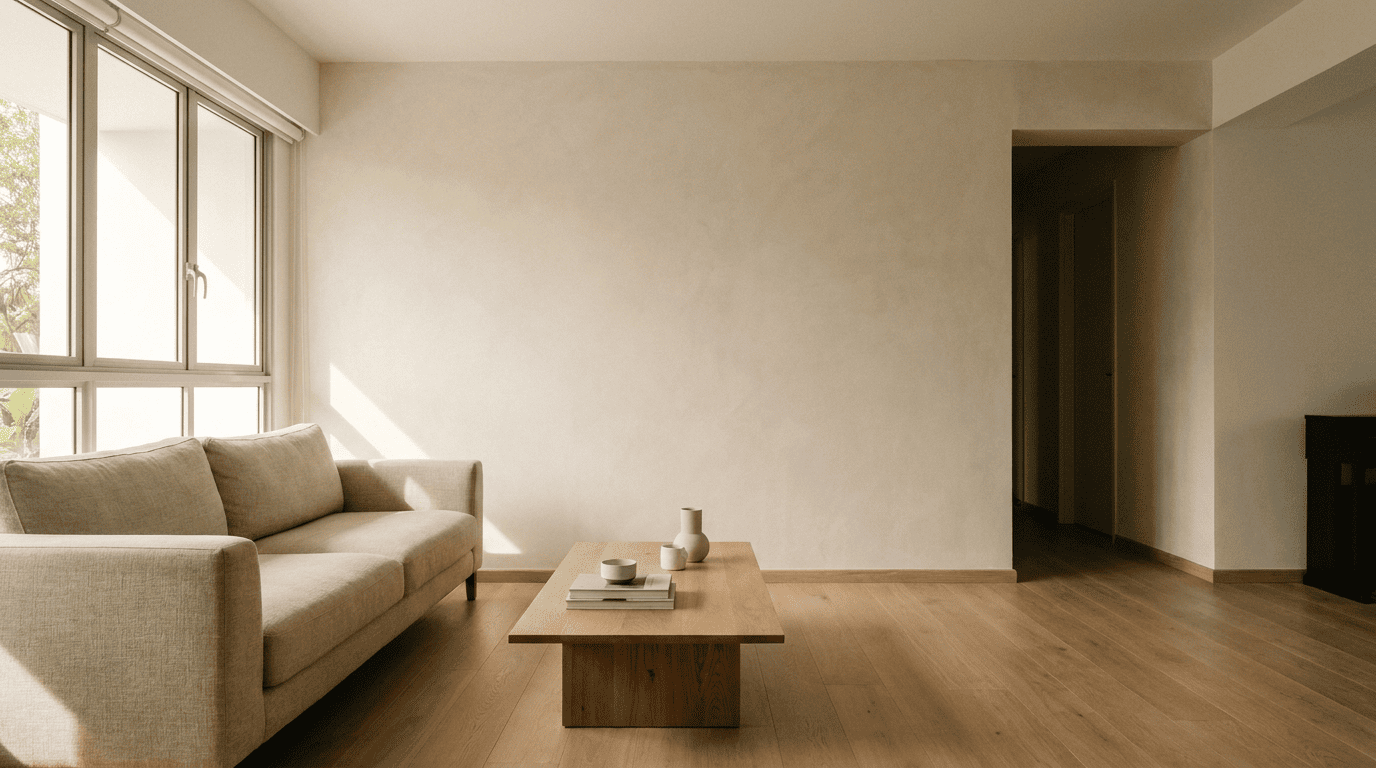
Why Texture Is the Difference Between a Nice Home and a Designed Home
Key Takeaways
- Textured interior design creates depth that colour and furniture alone cannot. Without surface variation, a room can look right on paper but feel flat when you are standing in it.
- A room full of smooth, reflective finishes tends to feel cold and uninviting, no matter how good the colour palette is. The brain registers surface quality before anything else.
- Textured interior design is not about adding more materials. It means choosing enough surface contrast so the eye finds warmth and depth in the space.
- Material selection in interior design affects how large or intimate a room feels, not just how it looks. Research shows wall texture can shift spatial perception depending on the material and room size.
- Modern home design in Singapore tends to favour timber grain, limewash, and woven surfaces because these materials create warmth that paint alone cannot replicate.
Introduction
There is a gap between a home that photographs well and one that actually feels good to be in. Texture is almost always what fills that gap.
Colour and layout explain how a space functions. But they do not explain why some rooms feel warm and considered while others feel like a showflat: everything placed correctly, nothing wrong, yet something missing. That missing quality is usually surface variation. Without it, the eye has nowhere to settle and the room never quite feels alive.
It is not about style. A bedroom with white walls, pale timber, and linen can feel either clinical or deeply calm depending almost entirely on the surfaces used.
What Texture Actually Does in a Room
Texture gives light somewhere to land.
On a flat painted wall, light bounces off evenly. The surface registers as a colour and disappears from attention. On a limewash wall or a panel with visible grain, light catches across the relief at different angles, creating subtle shadows in the recesses and highlights on the raised portions. The eye keeps moving across that surface instead of passing over it.
Research on how surfaces affect human perception confirms that surfaces with visible texture tend to feel warm and natural, while smooth reflective surfaces feel sleek and modern. This happens instinctively, before any conscious aesthetic judgment. It is why people walk into a room with textured walls and call it “warm” or “considered.”
Texture matters even in rooms that are not trying to make a statement. A neutral Singapore bedroom does not need a bold feature wall to feel warm. It just needs one surface that engages the senses differently from everything around it.
Why a Room Can Look Right But Still Feel Off
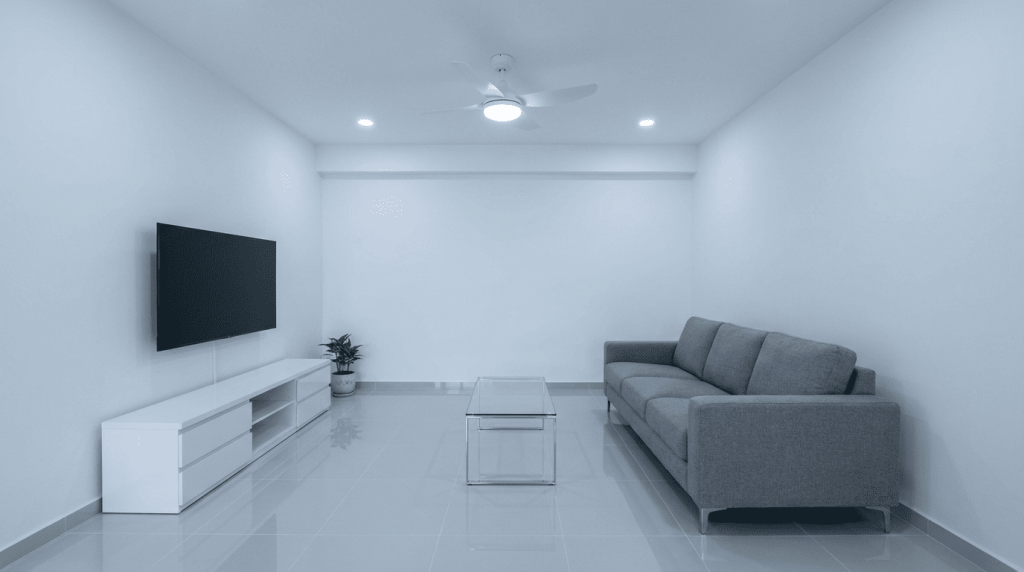
Most homeowners who renovate with a neutral palette and considered furniture end up happy with how the room looks on camera. The frustration comes later, living in it, when something still feels absent. It is hard to name. The colours are fine. The layout works. But the room never quite settles.
That feeling usually traces back to surface finish. When every material in the room is smooth, whether painted walls, laminate joinery, or polished flooring, the eye has no variation to move through. It scans the room and finds nothing that holds attention. The space feels resolved but not warm.
The same study also found that wall surface character — its hardness, reflectivity, and texture depth — has a measurable effect on how spacious or intimate a room feels. In smaller spaces, which cover most bedrooms and living rooms in Singapore HDB flats and condos, that effect is more pronounced. Which material you put on a wall shapes how the room feels to be in, not just how it looks.
How to Use Texture Without Making a Room Feel Busy
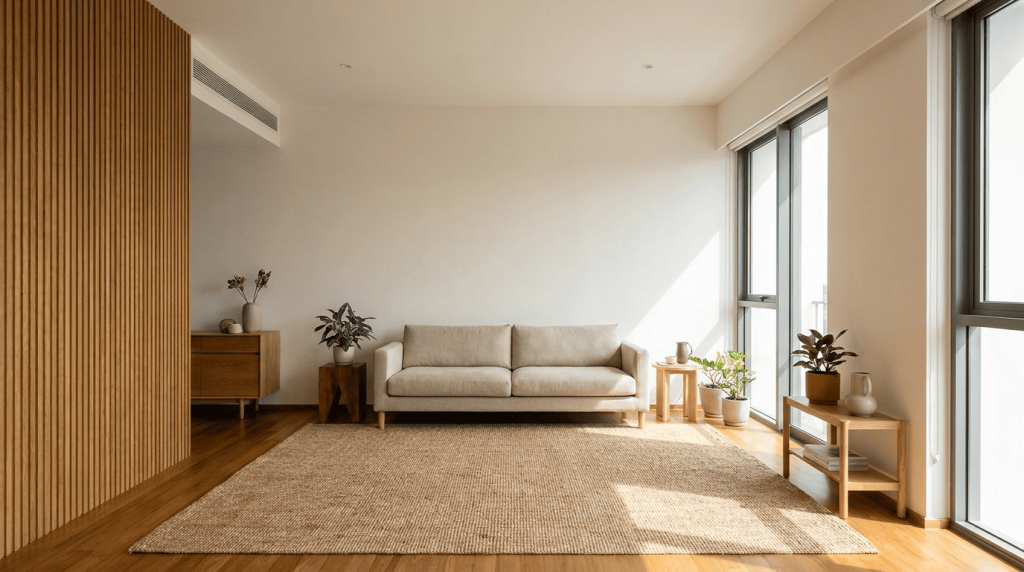
Too much texture causes a different problem. A rough feature wall, patterned rug, woven cushions, timber ceiling, and textured pendant in the same room give the eye too many surfaces competing for attention. The room feels chaotic.
The rule in practice is contrast, not accumulation. One or two surfaces do the textural work. The rest stay smooth and plain, giving those surfaces room to register.
In Singapore homes, this usually comes down to one of three approaches:
- One textured wall, three plain ones. A limewash finish, fluted timber panel, or stone veneer on one wall while the surrounding three stay painted. The feature surface stands out because of what surrounds it.
- Texture at floor level. A natural material rug over smooth tiles or timber flooring grounds the seating area without touching the walls.
- Textural joinery. Built-in cabinetry with a brushed or tactile finish in an otherwise plain room. The texture lives in the furniture, not the architecture.
The Material Pairings That Work Best in Singapore Homes
Singapore’s humidity means some materials hold up better than others over time, which matters when choosing finishes.
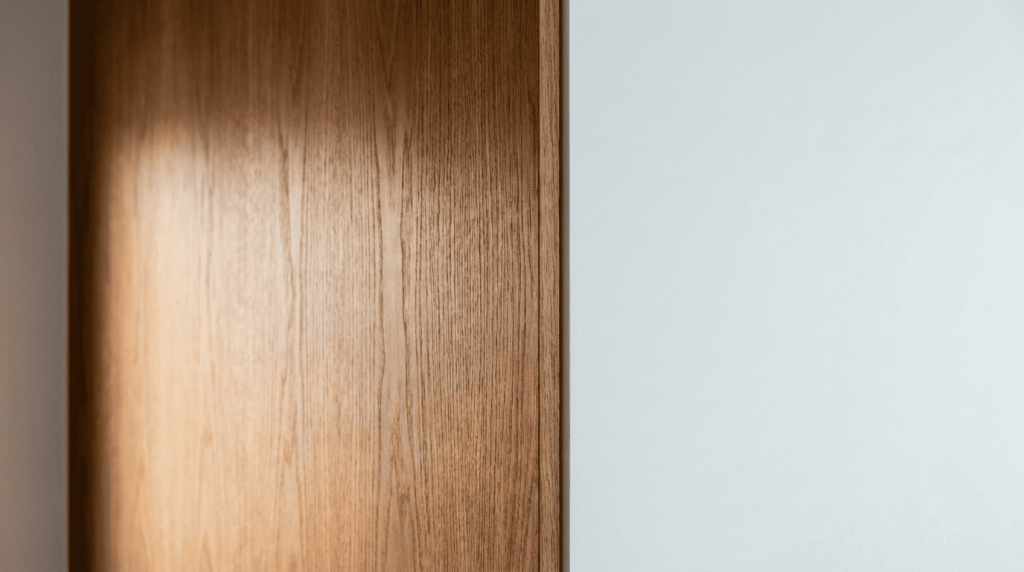
Timber grain against smooth painted plaster is the most reliable pairing locally. Sealed timber holds its appearance well in humidity, and the contrast between grain and flat paint stays clear for years. It is the reason timber-frame joinery and visible-grain wardrobe doors feature regularly in MJS Interior’s residential projects across HDB and condo spaces.
Limewash against polished flooring works well in living rooms and bedrooms with decent floor area. The limewash wall has a soft, matte depth that shifts subtly through the day as light changes, while the polished floor below provides the smooth contrast that makes the wall register clearly.
Woven textiles, rattan, and boucle are the lowest-commitment options. They add surface warmth without requiring any renovation work, making them a practical first step for homeowners who want to test the effect of texture before committing to structural changes.
Stone or porcelain tile with visible grain is well-suited to bathrooms and kitchens where moisture resistance is a priority. It adds material depth without the maintenance demands of natural stone.
Is Textured Interior Design Right for Your Home?
If a room feels flat or clinical despite a considered colour palette and decent furniture, surface variation is usually the missing piece. Textured interior design is not a style category. It is a practical tool that works across minimalist, Japandi, and classic interiors alike. The question is not whether to use texture but which material, on which surface, and in what proportion.
If a room feels considered but flat, the answer is almost always one surface decision away.
Those decisions are best made at the brief stage, alongside the lighting and joinery choices they interact with directly.
Frequently Asked Questions
1. What does textured interior design mean in practice?
It means using materials with visible surface character, rough alongside smooth, matte alongside sheen, grain alongside flat paint, so the eye finds depth in the room rather than a uniformly flat finish. In Singapore homes, this typically involves one or two textured surfaces against a neutral or smooth backdrop.
2. Does texture make a small Singapore home feel smaller?
It can, depending on the material and how much is used. Research on spatial perception indicates that textured wall surfaces affect perceived room size differently depending on the material. In compact spaces, designers generally use texture selectively on one wall or through soft furnishings, rather than across all four walls, to keep the room feeling open.
3. What materials work best for modern home design in Singapore?
Timber grain, limewash, and woven textiles tend to work well both practically and aesthetically in Singapore’s climate. They add warmth and surface depth while keeping the space feeling modern and calm rather than decorative. Modern home design in Singapore typically pairs one of these against clean paint or smooth laminate for contrast.
4. When should material selection be made in a renovation?
Before walls close and electrical work is committed. Texture interacts with lighting directly: angled light amplifies surface relief, diffuse light minimises it. A textured wall specified without confirming the lighting position often underperforms.
5. How does MJS Interior handle material selection in interior design projects?
Texture and material decisions are part of the brief and 3D design stage, not afterthoughts once the layout is locked in. The completed residential projects show how this plays out across different home types in Singapore.
The difference between a home that looks finished and one that feels considered is often a single surface decision. Getting it right means choosing materials before the renovation begins, not after.
MJS Interior works through texture and material decisions at the brief stage as part of its design and build process. For homeowners at the planning stage, reach out to MJS Interior to discuss what your renovation could look like.