

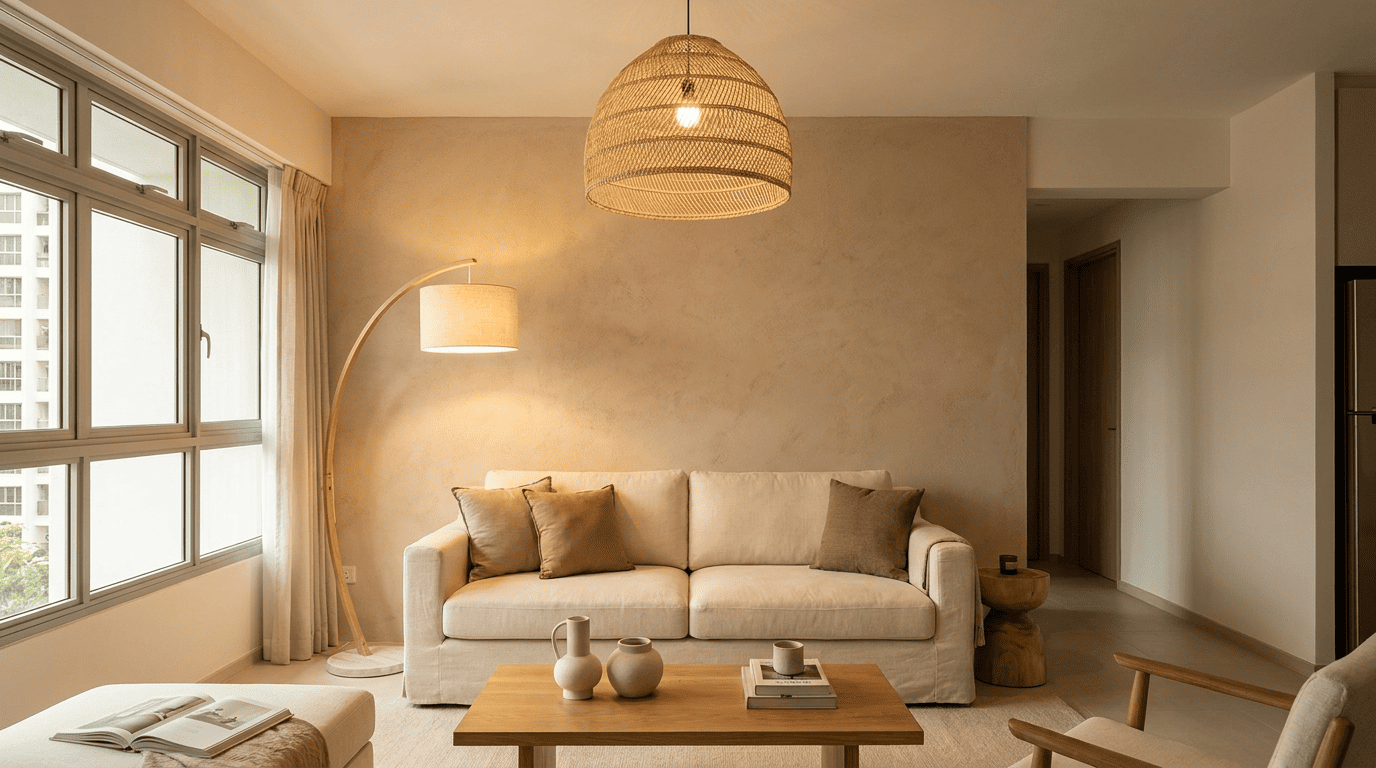
Living Room Design Ideas That Make Guests Feel Instantly Welcome
Key Takeaways
- Living room design in Singapore shapes how guests feel about a home before they’ve sat down. Sightlines, lighting warmth, and where the eye lands on entry all play a role.
- The first few seconds inside a room are governed by light levels, spatial openness, and whether the eye finds a clear focal point, not by furniture style alone.
- Seating arrangement communicates welcome or indifference. A layout oriented inward, around a focal point, invites people to stay.
- Living room renovation decisions made at the brief stage, particularly lighting and built-in storage, are far more effective than decorative fixes applied after the fact.
- Home interior design in Singapore works best when it accounts for how the space feels to someone arriving for the first time, not just someone who lives in it daily.
Introduction
A guest’s impression of a home forms fast. Research from Falmouth University’s interior design faculty notes that interior spaces alter first impressions almost immediately, through the combined effect of light, colour, scale, and composition working before any conscious assessment takes place.
In Singapore homes, the living room is where that impression lands. Most HDB flats and condos place it directly off the entrance with no buffer corridor, so the design choices here carry more weight than in homes where arrival is more gradual. A welcoming living room is not a function of budget or square footage. It comes from a small number of decisions made during planning, not decoration.
The First Three Seconds: What Guests Notice Before They Sit Down
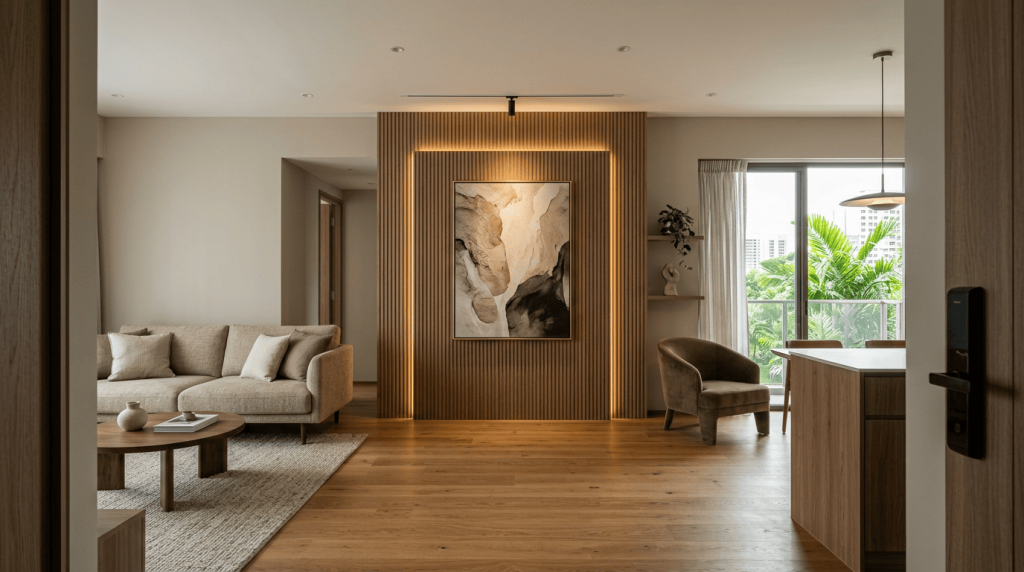
In a Singapore living room, the view from the entrance is the most important composition in the space. Whatever the eye lands on first becomes the anchor the rest of the room is measured against. A television surrounded by cable management and a media console packed with devices gives the room a functional character. A feature wall with considered texture, artwork at seated eye level, or a well-lit shelving arrangement gives it a designed one.
The view from the entrance is the most important composition in a living room. Whatever the eye lands on first becomes the anchor.
This is not an argument against having a television. It is an argument for treating the wall it sits on as a design element rather than a storage surface. Built-in joinery that frames the TV and conceals cables changes how the whole wall registers. What surrounds the screen shapes how the screen is perceived.
Clear sightlines matter too. A guest should be able to see the seating area from the entrance without navigating around a coffee table corner or a rug that breaks the natural path. The room should feel approachable, not like a puzzle to solve on arrival.
Lighting That Sets the Right Tone
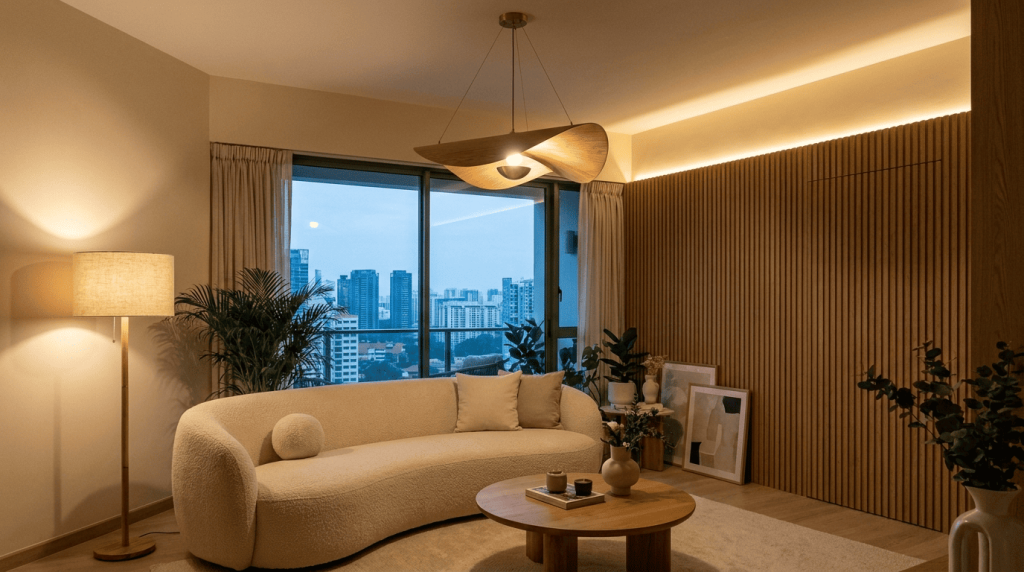
Overhead lighting alone rarely makes a living room feel welcoming. A single ceiling panel floods the floor and furniture with light from above, casting shadows on faces and making the space feel more like a workplace than a home.
Warm, layered lighting changes this. A pendant over the seating area places light at human height. A floor lamp in a corner softens the perimeter. Strip lighting behind a feature wall adds depth without glare. These layers create even warmth that makes people feel at ease. Colour temperature matters too: cool white light at 4000K can feel harsh in a residential living space, while warm white at 2700K to 3000K settles the room noticeably. As covered in the MJS Interior piece on statement lighting and how it shapes Singapore homes, lighting planned at the renovation brief stage is far more effective than changes attempted after electrical work is done.
Warm, layered lighting changes how a room reads. A pendant at human height does something a ceiling panel never can.
Seating Layout and the Psychology of Invitation
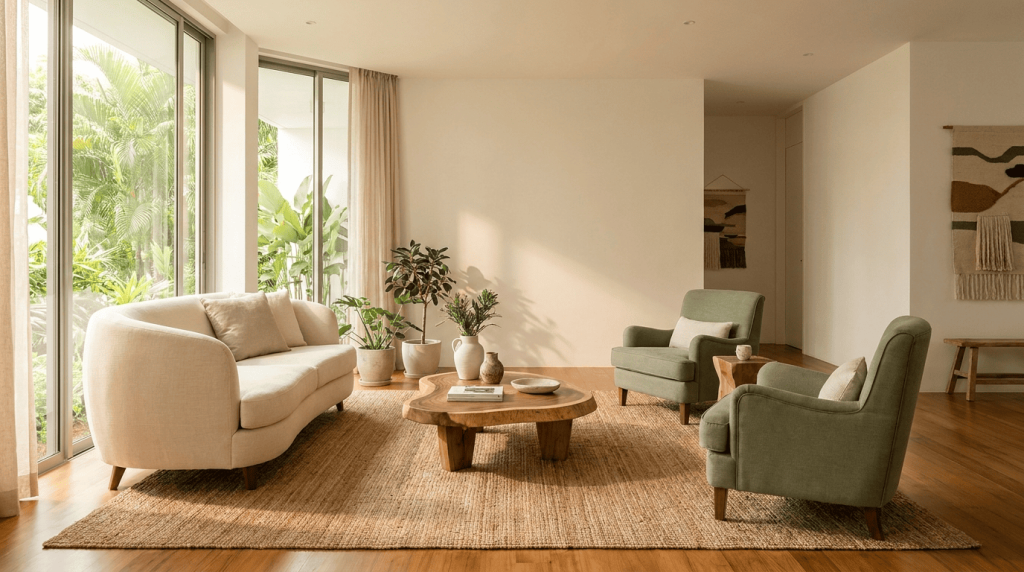
A sofa pushed flat against a wall and facing the television tells a guest where to look but not where to be. It optimises for screen viewing, not conversation. Guests tend to sit in a line, looking forward, with little natural way to turn toward each other.
Bringing seating inward, even slightly, creates a different dynamic. Two sofas angled toward each other, or a sofa and armchairs oriented around a central coffee table, puts people in conversation position without requiring them to make an effort. In compact Singapore flats, this often requires less furniture, not more: removing a piece that was filling space, pulling the sofa 30 to 40 centimetres from the wall, and choosing a coffee table proportionate to the seating around it. Repositioning costs nothing. The room just has to be looked at differently before renovation locks everything in.
The Small Details Guests Remember
Consistent hardware across the room, matching door handles, curtain rod finishes, and light switch plates, registers as considered, even if no guest could name the individual pieces. A rug large enough to anchor the seating group rather than sitting under just the coffee table defines the space rather than floating within it. Curtains hung above the window frame draw the eye upward and make the ceiling feel higher.
Scent and air quality matter too. A home free of cooking odours or artificial air freshener gives guests nothing to consciously register, which is the point: physical comfort is felt before it is noticed. Good ventilation planning belongs in the living room renovation brief for the same reason lighting does.
Is Your Living Room Designed for Guests or Just for You?
A living room designed only for daily household use tends to optimise for screen viewing and circulation. One designed with guests in mind orients seating for conversation, plans lighting for warmth, and creates a clear visual landing point from the entrance. The two aims are not incompatible: the best living room design in Singapore achieves both.
Frequently Asked Questions
1. What is the most important element of living room design in Singapore for creating a welcoming space?
Lighting has the highest impact for the least structural intervention. Warm, layered lighting at human height changes how the entire room reads without requiring any furniture change. After lighting, the visual landing point from the entrance and the seating orientation make the greatest difference to how guests experience the space.
2. How do I make a small Singapore living room feel welcoming rather than cramped?
Avoid pushing all furniture to the walls. Pull the sofa slightly inward, use a rug large enough to anchor the seating group, and add lighting that fills the perimeter rather than just the centre. A single defined focal point, rather than several competing ones, keeps the room from feeling busy.
3. When should living room renovation decisions be made to achieve the best result?
Lighting circuits, built-in joinery for media and storage, and feature wall treatment should be decided before renovation begins. Electrical work is significantly more expensive to retrofit. Joinery designed into the brief prevents the ad-hoc furniture additions that create visual clutter after handover.
4. Does the seating layout really affect how welcome guests feel?
It does. Seating arranged for conversation puts people in position to engage without effort. A line of sofas facing a screen is comfortable for watching but not for talking. This can often be fixed by repositioning existing pieces rather than buying new ones.
5. What connects home interior design in Singapore to how guests feel on arrival?
Light, visual order, and spatial clarity are the same elements that good home interior design in Singapore prioritises at the planning stage. A room designed with a clear brief feels welcoming to someone who has never been there before, because the space communicates that it was thought through.
Getting the living room right is less about decorating and more about the sequence of decisions made before renovation: where the light goes, what the eye lands on from the entrance, and how the seating invites people to stay.
MJS Interior has over 20 years of experience helping Singapore homeowners plan living rooms that work well daily and feel welcoming to guests. The design-and-build team brings living room design that Singapore homeowners can rely on, approaching each project as a brief-stage conversation about how the space should feel and function. For homeowners planning a living room redesign or full home renovation, reach out to MJS Interior and bring your floor plan.