

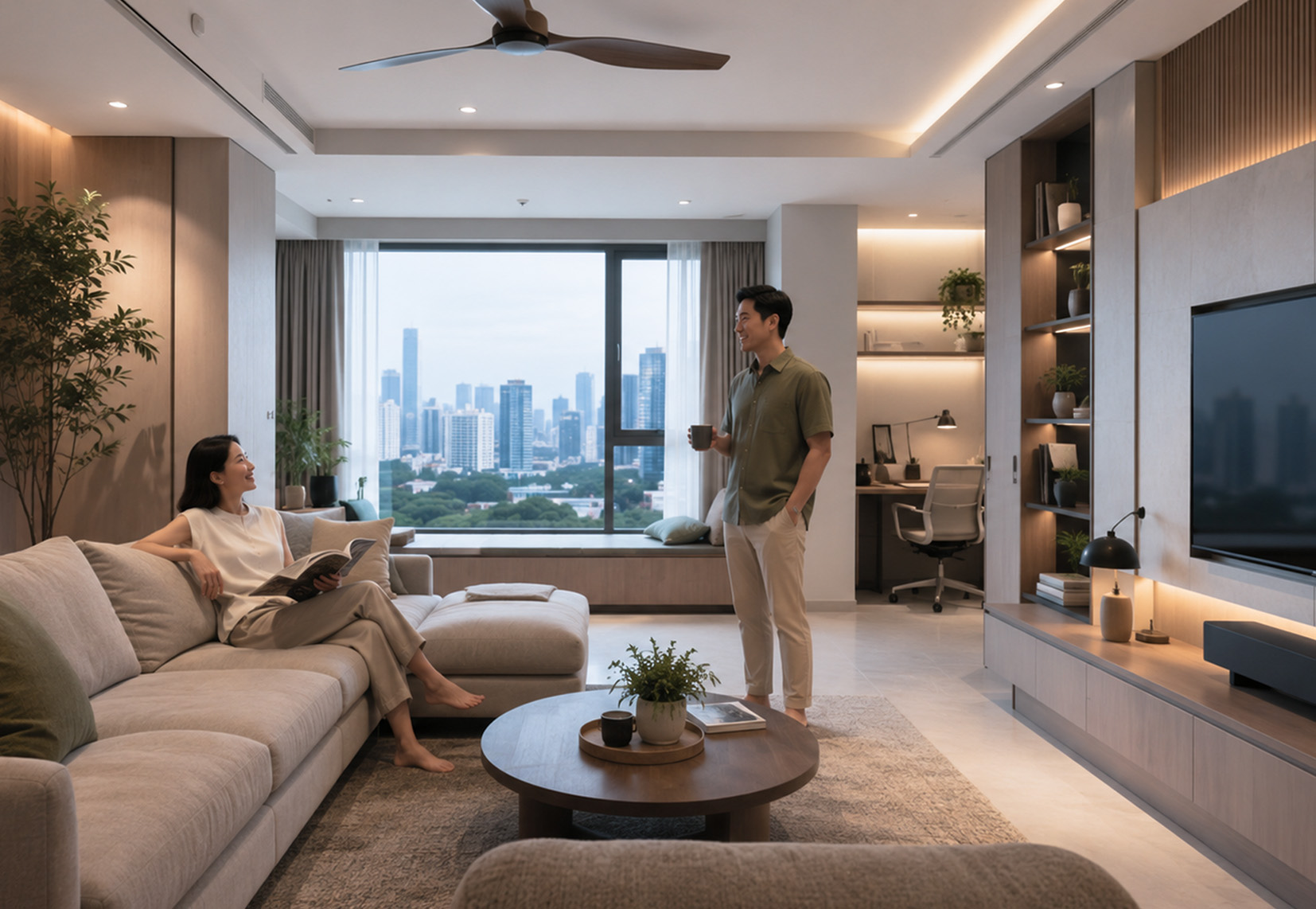
Why More Singapore Homes Are Designed for Comfort, Not Just Style?
Key Takeaways
- Residential interior design in Singapore is moving away from aesthetics-first briefs toward homes that are genuinely livable, quiet, and physically supportive.
- The shift is driven by three structural forces: longer hours spent at home, the normalisation of hybrid work, and greater awareness of how physical environments affect wellbeing.
- Comfort in design is not softness. It’s the result of deliberate decisions about acoustics, light, storage, and spatial flow.
- Style and comfort are not opposites. The homes that achieve both start with function and let aesthetics follow.
- MJS Interior’s CaseTrust-RCMA-accredited team has over 20 years of experience designing Singapore homes that perform as well as they look.
Introduction
Step inside an elegant Singaporean house, and something occurs before you can articulate what it is. Outside noise gets muffled, and the lighting feels right. You know exactly where all the things are. You relax. This is not happenstance; it’s because of design elements that have been carefully considered and, for the most part, will no longer be visible after the renovation. The increasing focus on comfort is a trend that is reflective of a bigger change in how homeowners think about their houses.
According to global home-life survey data recently collected, 36% of people view enjoyment as important but rarely feel it in their houses, while only 29% of those who enjoy themselves at home consider themselves satisfied with their life in that environment. Similarly, the survey showed that about 75% of people who regularly feel a sense of belonging experience enjoyment often.
Homeowners in Singapore have never been more direct in their requests. The brief has evolved. Five years back, discussions about interior renovations revolved around the chosen style. Nowadays, interior designers working on residential interior design in Singapore hear the following inquiry first: How can I create an environment that feels good to be in?
This blog highlights the factors behind such a phenomenon, describes what comfortable interior design really means and why it is a new trend in home design in Singapore.
Residential Interior Design in Singapore
Residential interior design in Singapore is the art and science of designing the interiors of homes in Singapore, which may be HDB flats, condominium units, or landed homes. The various aspects of interior design include spatial planning, material choice, lighting, joinery, and the coordination of furniture and finishings into an integrated whole.
Comfort-driven residential interior design in Singapore revolves around creating comfortable living spaces that take into consideration the lifestyle of the inhabitants. It does not involve choosing the aesthetic style first and trying to force the function into that style but considers the ways in which people use their home in their everyday life.
The Structural Shift Behind Comfort-First Design
Three forces have converged to change what Singapore homeowners expect from their homes. The first force is time spent at home. Hybrid work has become a permanent part of Singapore’s working culture, changing how residential spaces are used throughout the day.
Key shifts linked to hybrid work include:
- The Ministry of Manpower’s Tripartite Guidelines on Flexible Work Arrangement Requests took effect in December 2024.
- Flexible work arrangements are now normalised across the workforce.
- Homes increasingly function as partial workspaces during the week.
- Living rooms now need to accommodate focus work, video calls, and rest within the same floor area.
- Residential layouts are being asked to support multiple functions simultaneously.
The second force is noise. Rising urban density and longer hours spent at home have increased homeowner sensitivity to sound within residential environments.
Acoustic concerns commonly include:
- Ambient noise from neighbours.
- Traffic and external urban sound.
- Mechanical and building system noise.
- Sound transfer through shared walls and ceiling slabs.
- Reduced tolerance for noisy interiors after spending longer periods at home.
A family that previously spent eight hours out of their apartment might be okay with a noisier interior environment since the time spent there is mostly in the evenings. Now that this same family spends 12-14 hours inside their apartment, the way they interact with this environment will definitely change. Thus, acoustic comfort has become an element of necessity rather than an added luxurious one.
The third force is a broader shift in how homeowners think about well-being. The connection between physical environments and mental health is more widely recognised today than it was a decade ago.
This shift in homeowner thinking includes:
- Greater awareness of how lighting, clutter, and noise affect stress levels.
- Increased interest in homes that support rest and emotional comfort.
- Less emphasis on purely trend-driven renovation decisions.
- More focus on how a home performs during ordinary daily life.
Homeowners who once prioritised resale value or aesthetics alone are now asking what their home genuinely does for them on a normal day.
The brief has shifted from “I want my home to look like this” to “I want my home to feel like this.” That’s a different conversation, and it produces a different result.
What Do Comfortable Home Interiors Involve?

Comfortable home interiors are not created through decoration alone. They come from technical renovation decisions made early in the planning stage, particularly around acoustics, lighting, ergonomics, and storage.
| Comfort Element | Common Problems in SG Homes | Design Solutions | Impact on Daily Living |
|---|---|---|---|
| Acoustic Management | Hard surfaces, bare floors, open layouts, neighbour noise, sound transfer through walls and ceilings | Textured rugs, carpets, soft-close joinery, upholstered panels, acoustic ceiling tiles, floor-to-ceiling lined curtains | Reduces echo, external noise, and sensory fatigue during long hours at home |
| Lighting Temperature & Layering | 4000K ceiling LEDs feel overstimulating at night | 2700K–3000K ambient lighting, dimmable cove lights, floor lamps, pendant fixtures | Supports smoother transitions between work, relaxation, and evening rest |
| Ergonomic Planning | Poor traffic flow, glare, awkward storage reach, and uncomfortable work surfaces | Counter heights matched to users, better work surface positioning, correct storage zones, efficient kitchen circulation | Improves ease of movement and reduces daily physical frustration |
| Integrated Storage | Visible clutter, crowded surfaces, lack of organisation | Built-in joinery, dedicated work equipment zones, storage based on household needs | Creates calmer interiors and lowers visual and mental stress |
| Comfort-First Design Approach | Comfort is treated as decoration or an afterthought | Technical planning during the renovation brief stage | Produces homes that feel more livable, balanced, and restful over time |
Style and Comfort Are Not in Conflict
A common misunderstanding of comfort-first design is that it prioritises plainness over beauty. Recent residential interior design Singapore projects show the opposite. Homes designed around genuine comfort are often more visually refined because decisions are guided by intention rather than short-term trends.
Comfort-first interiors naturally produce design qualities such as:
- Material continuity across spaces
- Restrained and calming colour palettes
- Clean and uninterrupted joinery lines
- Warm layered lighting
- Visually cohesive layouts
- Reduced visual clutter
These same qualities define the dominant home design trends Singapore homeowners favour in 2026, including:
- Japandi
- Warm Minimalism
- Calm contemporary interiors
The overlap is not accidental. These styles became popular because they visually reflect how a comfortable home feels to live in. The advantage of a comfort-first approach is that homeowners often achieve stronger aesthetic outcomes when they begin with functionality before appearance.
Examples of this include:
- Neutral palettes chosen for calmness also photograph beautifully.
- Floor-to-ceiling joinery planned for storage and acoustic control also creates clean architectural wall planes.
- Layered warm lighting selected for usability also produces a premium showflat atmosphere.
- Functional spatial planning often results in visually cleaner interiors.
The sequence matters more than many homeowners realise during the early renovation brief stage. The difference between a warm minimalism home that looks beautiful but feels clinical and one that genuinely works usually comes down to whether the comfort brief was completed before the visual brief began.
Getting that sequence right is what separates:
- Residential interiors that remain livable long-term.
- Renovations that only look impressive at handover.
For homeowners interested in how a lifestyle-first approach shapes renovation planning, the MJS Interior guide to lifestyle-first design explains the sequencing process in greater detail.
The most beautiful Singapore homes in 2026 are beautiful because they’re livable. Comfort isn’t the opposite of good design. It’s the foundation of it.
Is Comfort-First Residential Interior Design in Singapore Right for Your Home?
The right question isn’t whether comfort-first design applies to your home. It’s whether your current renovation brief already accounts for it. Many homeowners experience signs of comfort being left out of the design process, including:
- A home that looks visually correct but feels tiring over long hours.
- Surfaces that never seem fully clear or organised.
- Lighting that feels too harsh at night and too dim in the morning.
- Spaces that photograph well but feel uncomfortable in daily use.
- Layouts that create low-level frustration during routine activities.
These issues are often the result of comfort decisions being excluded from the original renovation brief. A comfort-first renovation does not necessarily cost more than a conventional renovation. What changes is the design process itself.
It requires:
- A designer who asks different questions early in the project.
- Homeowners are willing to evaluate how the home functions daily before choosing aesthetics.
- Greater attention to routine, lighting, acoustics, and movement patterns.
Questions worth asking before signing a renovation brief include:
- Where do you spend most of your time at home?
- Which parts of your current home frustrate you daily?
- Where does noise come from, and when is it most noticeable?
- Which areas are meant for rest or winding down?
- Does your current lighting support those functions properly?
The answers shape every downstream design decision, including:
- Joinery placement.
- Lighting layout and switch positioning.
- Storage planning.
- Curtain selection and material weight.
- Spatial flow and furniture arrangement.
Getting those decisions onto paper early costs nothing. Leaving them out often costs the renovation itself.
FAQs

Q1. Why is there a shift towards comfort in residential interior design in Singapore?
There are several factors that influence this trend, which include the normalisation of hybrid work, more time spent at home, and an increasing understanding of the impact of physical surroundings on mental health. The Tripartite Guidelines on Flexible Work Arrangements introduced in Singapore in December 2024 make flexible and home-based work an integral part of the new way of working for most families.
Q2. What does comfortable home interiors mean in practice?
Comfortable home interiors are determined by technical decisions made at the design stage, such as acoustic treatment with the help of soft materials and built-in joinery, comfortable layers of lighting corresponding to different periods of the day, ergonomically designed space in correspondence with family dynamics, and built-in storage solutions for organising household clutter.
Q3. Are comfort-driven home design trends prevailing in Singapore in 2026?
The predominant trends in home design preferred by Singapore home owners in 2026, Japandi, Warm Minimalism and contemporary calm styles, create interiors that give priority to sensory tranquility along with aesthetic appeal. The overlap is no accident; it happens because all these styles got popular precisely because of the way a truly comfortable interior should feel.
Q4. Is it possible to make a small HDB flat both comfortable and stylish?
Yes. The smallest layouts can gain the most from a comfort-driven approach because every square foot counts. Proper acoustic management, layering of light sources and in-built storage systems will have an especially high impact on the design of a 4-room flat as compared to bigger premises.
Q5. What is the way MJS Interior creates comfort-based designs for residences?
The team at MJS Interior starts off every job with a brief that outlines how each space within the house will be used during an entire week prior to selecting any design. This reveals what needs to be incorporated in the design as far as acoustics, ergonomics, lighting, and storage are concerned.
Conclusion
The trend towards comfort in the interior design of residential Singapore apartments is not a passing design trend. This trend speaks to the changing priorities of homeowners who have to live, work, and relax in their apartments for quite a while. Aesthetic appeal still matters, but the apartment designs that will be relevant in 2026 are typically the designs developed with thorough pre-planning before making decisions about the materials and fixtures.
MJS Interior has been involved in renovations in Singapore for more than 20 years. As a CaseTrust-RCMA-accredited interior design firm, they provide services on all types of housing: HDB, condominiums, and landed properties, creating interiors that combine functionality, storage space, lighting, spatial arrangements, and aesthetic visual appeal.
In case your upcoming renovation brief involves not just the look but also the experience of living in your house, then you might want to engage the help of MJS Interior for consultation, design previews in 3D and renovation coordination. See how a reliable interior design agency like MJS Interior can help create a home designed for living through the entire spectrum of MJS Interior’s residential interior design and renovation services.
Whatever your home’s size, whether an HDB flat or bigger family home, our team always takes into consideration usability, storage and the convenience of living in the home. Contact the MJS Interior team today and start exploring home design trends in Singapore.