

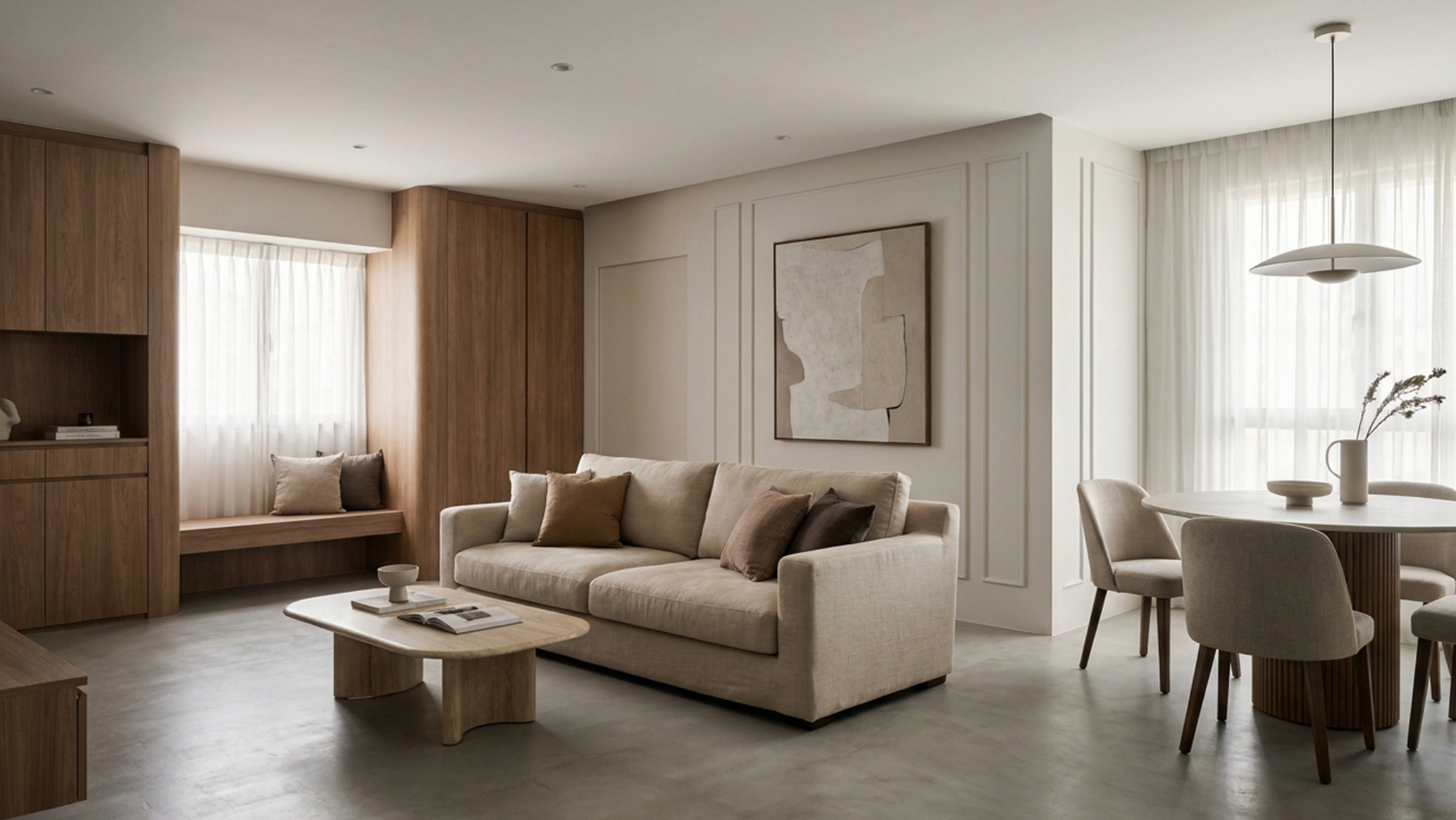
Renovation vs Interior Design: Understanding What Your Home Really Needs
Key Takeaways
- Renovation covers the physical build: hacking, tiling, carpentry, electrical, and plumbing. Interior design covers the planning that determines what the physical work should produce.
- Interior design and renovation in Singapore are often offered together, but they are distinct services with different scopes.
- A renovation company in Singapore executes what is specified. If no clear specification exists, a contractor alone will not produce one.
- An interior designer in Singapore plans the space, selects materials, and produces drawings. Whether they also manage the build depends on the firm.
- A design-and-build firm handles both under one contract.
Introduction
Two homeowners. Same HDB flat size. Same renovation budget. One ends up with a home that works well and feels considered. The other ends up redoing things six months later. The difference, more often than not, comes from whether they knew which service they were actually hiring.
Renovation and interior design are separate services. Understanding what each covers, and when a project needs one versus both, is one of the more practical things a homeowner can sort out before any quote is requested.
What Is the Difference Between Renovation and Interior Design in Singapore?
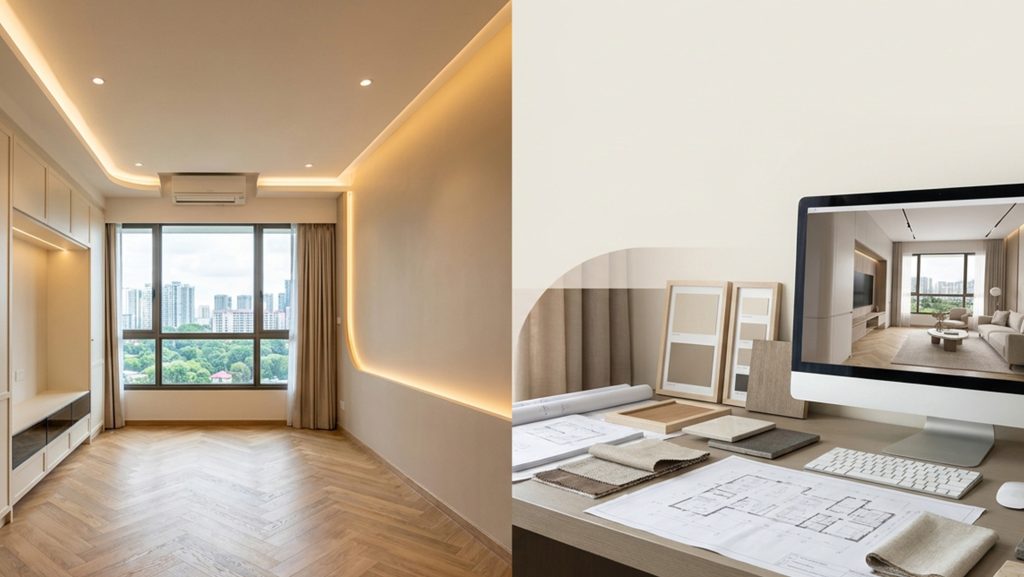
| Renovation | Interior Design | |
| What it covers | Physical work: hacking, tiling, carpentry, electrical, plumbing, painting | Planning: layout, material selection, drawings, 3D renders, finish specifications |
| What they produce | The completed physical space | Plans and specifications for what that space should be |
| Who does it | Renovation contractor | Interior designer |
| HDB requirement | Contractor must be listed in HDB’s Directory of Renovation Contractors | No equivalent licensing requirement |
| Accountable for | Workmanship and build quality | Design direction and material coordination |
Renovation produces the result. Interior design determines what that result should be.
Can You Have One Without the Other?
Yes, and both arrangements are common in Singapore.
Renovation without design suits homeowners with a clear and complete brief: materials chosen, dimensions decided, layout settled. The contractor executes the specification. Where decisions are still open, the contractor fills those gaps based on their own defaults, not the homeowner’s preferences.
Interior design without renovation suits homeowners who need a plan but are managing the build independently. The designer produces drawings; the homeowner coordinates the contractor. Without direct contact between designer and contractor, what gets built may not fully reflect what was drawn.
The problem tends to arise when a homeowner assumes one service includes what the other actually provides.
What a designer draws and what a contractor builds can diverge quickly without someone connecting the two.
What Goes Wrong When Design and Renovation Are Handled Separately?
- The built result does not match the plan. A contractor interprets drawings differently or substitutes materials. With no single party responsible for both design and build, disputes about the gap become the homeowner’s problem.
- Decisions clash mid-build. Joinery sizing, electrical outlet positions, lighting circuits, and ceiling treatments are all connected. When they are settled by different parties at different times, conflicts tend to surface on site when they are harder and more disruptive to resolve.
- HDB compliance falls through the gap. For HDB flat projects, contractors must be listed in the Directory of Renovation Contractors. Certain works need prior approval. When design and build are coordinated by different parties, navigating these requirements can fall to the homeowner.
Which One Does Your Singapore Project Actually Need?
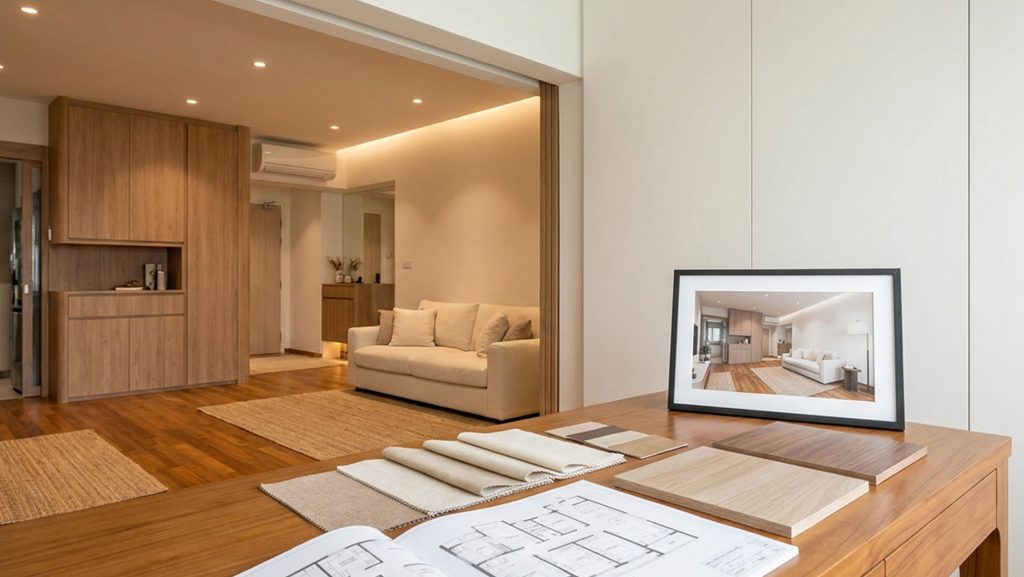
| Your situation | What tends to suit the project |
| Materials, layout, and dimensions are already decided | A renovation company in Singapore can execute without additional design input |
| You have a general direction but need it developed into a plan | Involving an interior designer in Singapore before the build tends to produce a more coherent result |
| You want one team responsible for both the design and the build | A design-and-build firm covering interior design and renovation in Singapore under one contract |
MJS Interior is a design-and-build firm, handling both interior design and renovation in Singapore from the initial brief through to handover, including the 3D design stage, material coordination, HDB permit management, and site supervision. The project portfolio includes completed HDB and condo renovations across Singapore.
Once You Know Which Service You Need, What Comes Next?
Once the type of service is clear, the rest of the decision follows more naturally. A homeowner who needs execution only is looking for a contractor with the relevant HDB registration and a track record in similar projects. A homeowner who needs design input first is looking for a firm whose design work reflects how they want to live, not just how their portfolio photographs.
A homeowner who wants both handled under one engagement is looking for a design-and-build firm, which is what MJS Interior offers. The design and build services cover everything from the initial brief through to handover, with the same team responsible for both the design and the build.
Frequently Asked Questions

1. What is the difference between a renovation company and an interior designer in Singapore?
A renovation company in Singapore handles the physical build: hacking, carpentry, tiling, electrical, and plumbing. An interior designer in Singapore handles the planning: layout, material selection, and drawings. Some firms offer both as a design-and-build service. Before signing any quote for interior design and renovation in Singapore, confirming exactly which services are included is worthwhile.
2. Do I need an interior designer for an HDB renovation in Singapore?
There is no legal requirement for one. HDB requires renovation contractors to be listed in its Directory of Renovation Contractors, but there is no equivalent rule for designers. Whether design input adds value depends on how complete the project brief already is. When layout, storage, and materials are still to be decided, resolving those before the build tends to produce a better outcome than making them up as work progresses.
3. What does CaseTrust-RCMA accreditation mean for homeowners?
CaseTrust-RCMA is a consumer protection accreditation for renovation and interior design firms in Singapore. It includes requirements around contract transparency, deposit limits, and a dispute resolution process if something goes wrong. MJS Interior holds this accreditation. When comparing firms, it is one of the more meaningful indicators of accountability beyond portfolio and price.
4. When should I start the design process relative to the renovation?
Before the renovation, not during it. Layout decisions, joinery sizing, electrical routing, and ceiling treatments all interact. When these are settled before the build starts, contractors have a clear brief and the risk of mid-build conflicts is lower. Changes made after walls are up tend to cost more and take longer than changes made on a drawing.
5. How does MJS Interior approach a project?
As a CaseTrust-RCMA accredited design-and-build firm with over 20 years of experience, MJS Interior handles both interior design and renovation in Singapore under one engagement. The process runs from the initial brief and 3D design stage through to physical build and handover. Reach out to the team to discuss your project scope and which service level fits.
Conclusion
Knowing what you are hiring, and why, tends to be more useful than comparing prices before the scope is clear. For homeowners planning renovation work in Singapore, MJS Interior is available to walk through what a project covers before any commitment is made.