

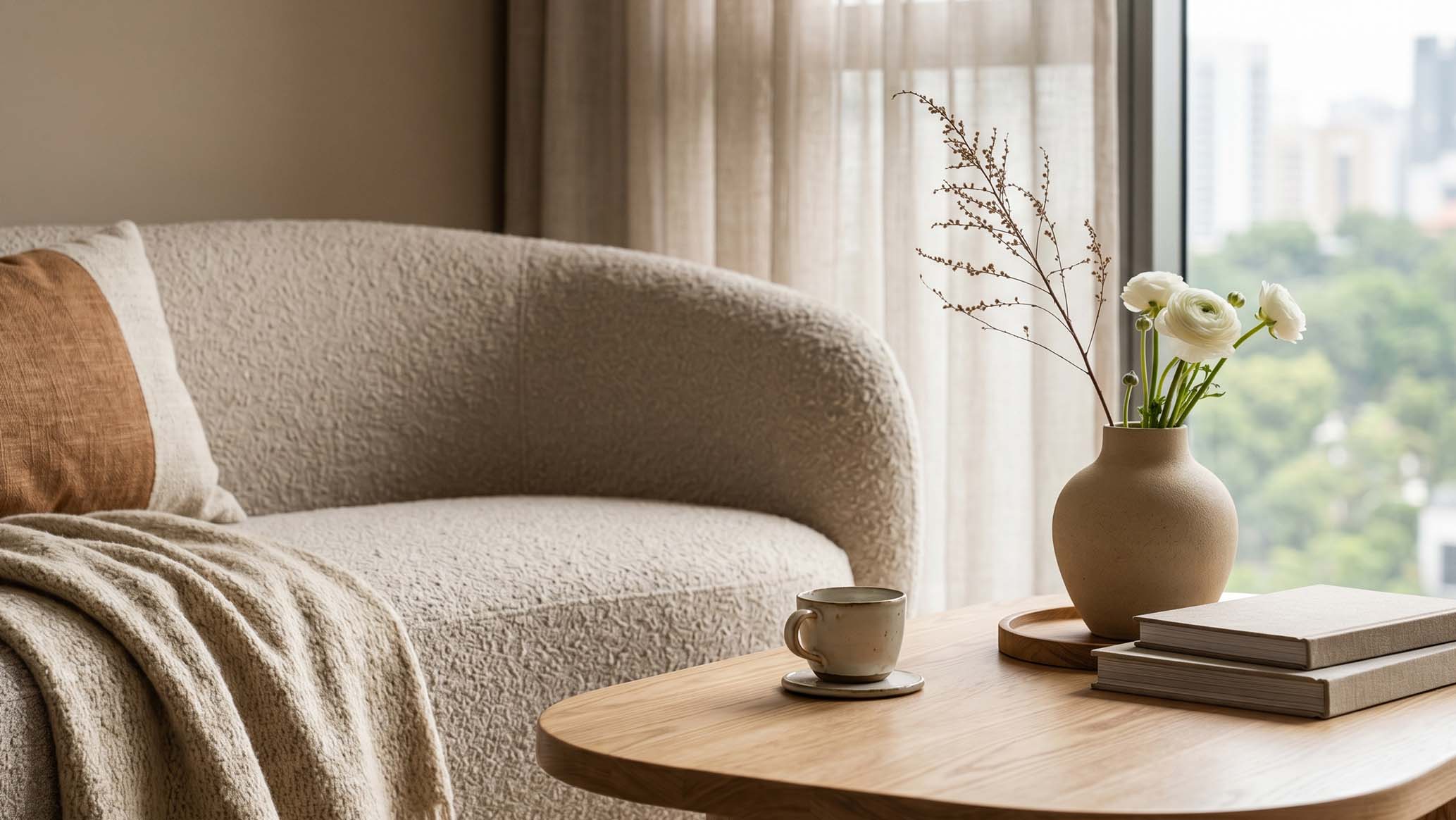
Why Are Soft Modern Interiors Taking Over Singapore Homes?
Key Takeaways
- Soft modern spaces are a blend of both cosy and clean. Unlike stark minimalist homes which may sometimes feel cold and too structured, soft modernism brings together the clean lines of minimalism with softer textures, gentler hues, and a cosy living environment.
- Owners today are interested in living in spaces which have a relaxing feel, while remaining welcoming as compared to spaces which are visually pleasing. Comfortable and cosy living space designs are becoming an integral element of renovation planning.
- Curved lines and textures are an important feature of the style. It may appear in the form of rounded furniture, stacked fabrics, timber textures and soft lighting to soften the visual severity present in a traditional modern interior space.
- This design is perfectly suited for small spaces. Soft modern interiors would be well-suited for HDB apartments and condominiums because the interiors tend to have layouts and balanced aesthetics that could also complement smaller spaces.
- The practicality of comfort is gaining more precedence than visual aesthetics. Owners are less keen on showroom-like interiors and are more eager to live in homes that are conducive for daily life.
Introduction
For a while, Singapore homeowners re-evaluate what modern interior design in the house should feel like. Ultra clean spaces, monochromatic colours, and fixed design style, previously dominating the renovated inspirations, were no longer cosy for everyday living. This shift has also influenced residential interior design Singapore homeowners now prefer for everyday living
According to the 2024 U.S. Houzz & Houzz & Home Study, homeowners significantly increased their median renovation spending in 2023, totaling $24,000. This consistent spending on the comfort, functionality and utility of the home points to the homeowner’s changing preferences toward a welcoming living environment. It was observed that kitchen, living room, and bedroom are the top three most commonly renovated rooms of the house.
This blog discusses why soft modern interior design Singapore homeowners prefer is becoming increasingly popular and how comfort-focused interiors are influencing modern living.
What Soft Modern Interior Design Means?
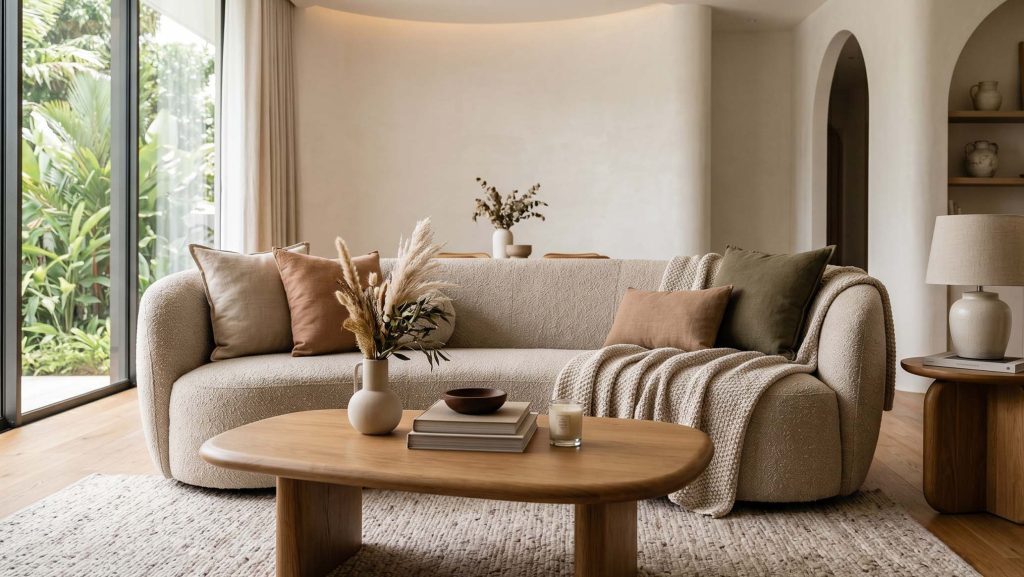
Soft modern interior design brings together the clean forms of modernism, with elements of warmth and softness that are a little more inviting. The idea is to create a comfortable and relaxing home, without appearing as rigid or stark as many forms of modernism, it is easy to use, and to love.
- It’s a very common misconception that every modern interior has to be a black, white, and gray scheme with harsh lines and minimalist furniture; while some modern spaces are quite stark and clean, soft modern interior design offers an alternative direction with warmer tones, more natural textures, softer lighting and more rounded forms, all within a clean design aesthetic.
- A soft modern interior design Singapore home would feature neutral colours, softer textures and furnishings; such as, a neutral palette, rounded coffee table, and multiple soft lighting layers. It combines a stylish interior with practicality, as the design supports family life and allows the space to be enjoyed on a daily basis, without feeling too precious.
The increase in the popularity of soft modern interior design has a lot to do with modern life; most homes no longer need to be a stark space in which to show off your belongings; they are a place to live, relax, and to entertain guests, all from one location.
Why Are Homeowners Moving Away From Harsh Minimalism ?
For a long time, minimalist décor was seen as elegant by the many urban home-owners. Aesthetically, simplicity of lines, decluttered surroundings and monochromes came to be synonymous with modernity. However over the years, some home-owners found that an overly minimalist interior could make their houses feel cold and distant.
- Overly bare spaces, with hard finishes and extremely reduced furnishing made their interiors seem to be stylish in photos but not very livable when inhabited.
- Families with children, working-from-home couples or home owners who are mostly in their houses now began to look for environments that feel softer and more relaxed.
- A factor of practical living has also been considered. Some minimalist furniture pieces seemed to place aesthetics in the front line as compared to comfort. Some storage solutions also made the houses feel more difficult to manage.
It is a growing trend that a lot of home-owners want an interior that is able to blend elegance and practicality-a “soft modern” look in Singapore. Many current home design trends Singapore homeowners still prioritise simplicity, but with a more natural and liveable atmosphere
The Role of Curves, Texture, and Warm Tones
One of the most distinctive qualities of soft modern interiors is the use of more rounded forms. It allows you to balance the sharp edges of conventional modern interiors with softer curved furnishings or organically shaped pieces.
- A sofa with a rounded shape, an arched mirror, round lighting elements, or a rounded coffee table can contribute to a smoother, softer visual trajectory throughout a room. Although they may be tiny details individually, together they profoundly affect how we feel about our home.
- Textural layering also helps in designing a softer interior. Homes that incorporate numerous textures emanate a feeling of warmth and visual equilibrium. Grain of wood furniture, linen textiles, bouclé fabric used for sofa/chair upholstery, matte finishes on cabinet/table surfaces, wicker-made details, and textured rug give such interior soft visual appeal.
- Lighting is also another aspect that affects the feel of a soft modern home. Instead of the crisp white lights usually associated with old school modern interiors, softer ambient light contributes to a more serene setting. Many modern homes integrate multiple lighting sources that can change to suit any mood throughout the day.
In a modern interior design Singapore house, the soft elements above create warm, inviting, but elegant and never imposing interiors.
Why Does Soft Modern Design Work Well in Singapore Homes?
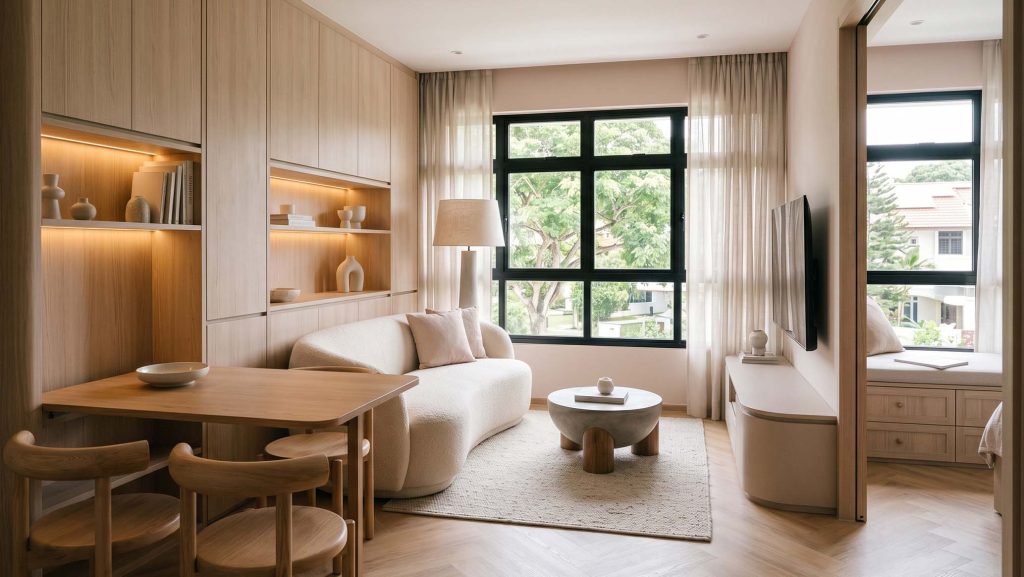
Space optimisation is very important for Singapore homes. This is due to the constraints of smaller sizes imposed by HDB flats and condominiums. In this regard, soft modern interiors are especially well-suited. This is primarily because a functional aesthetic is prioritised, alongside good design.
- The light colour palette with warm neutral colours makes the interior look more spacious without making it feel cold and clinical. Using light colours in conjunction with natural light makes the latter more impactful. Soft textures along with reflective surfaces enhance the effects of natural lighting further.
- The trend for integrated living that Singapore home designs currently tend to lean toward makes soft modern interiors well suited. In the home, it can serve as the dining room and a workspace at the same time, while living rooms become entertainment centers and relaxing zones. Soft modern interiors facilitate the need for smooth transition and spatial freedom due to its spacious designs.
- Its focus on convenience also appeals to trending interior design in Singapore as storage solutions and clutter-free living becomes more important in a home, without making the home look bare.
Small homes benefit from soft layering. The subtle addition of layering in a room adds dimensions without making the space look cluttered. Rather than making full use of decorative objects, soft modern homes rely on textured finishes and carefully selected furniture, along with well-designed lighting, to make a home feel cosy.
Soft Modern Design Elements That Influence Everyday Living
The table below highlights how these subtle choices influence comfort, mood, and functionality in modern homes.
| Design Element | How It Changes the Feel of the Home |
| Warm Neutral Colours | Creates a calmer and more welcoming atmosphere |
| Curved Furniture | Softens the visual sharpness of the space |
| Layered Lighting | Makes rooms feel more comfortable throughout the day |
| Natural Wood Textures | Adds warmth and reduces the sterile feel of minimal interiors |
| Textured Fabrics | Introduces visual depth without overcrowding the space |
| Hidden Storage | Helps maintain cleaner and less stressful environments |
| Open Layout Flow | Improves movement and functionality in compact homes |
| Soft Furnishings | Makes living areas feel more relaxed and liveable |
| Muted Decorative Accents | Keeps the design elegant without excessive visual clutter |
| Multifunctional Spaces | Supports modern lifestyles such as remote work and flexible living |
Creating a home that feels soft, modern, and livable comes down to the details. Each design element, if it’s the warmth of neutral tones or the flow of open layouts, quietly shapes how a space feels day to day.
How Functional Comfort Is Shaping Modern Renovation Choices?
Comfort has become one of the most influential factors shaping residential interior design Singapore renovation choices today. Homeowners are no longer focusing solely on appearance during renovation planning. Daily usability now plays a much larger role in design direction.
This can be seen in the growing preference for:
- Hidden storage solutions
- Multifunctional furniture
- Softer bedroom environments
- Practical kitchen layouts
- Clutter-reducing cabinetry
Families often prioritise layouts that support easier movement and more flexible routines. Young professionals working remotely may want spaces that transition comfortably between productivity and relaxation throughout the day.
Calmer bedroom environments have also gained attention. Many homeowners now prefer softer colour schemes, warmer lighting, and reduced visual clutter to create spaces that feel more restful after long workdays.
A well-designed soft modern interior design Singapore home usually avoids excessive decoration while still feeling warm and welcoming. The balance between practicality and aesthetics is what makes the style appealing for long-term living rather than short-term visual impact.
Creating a Balanced Soft Modern Interior
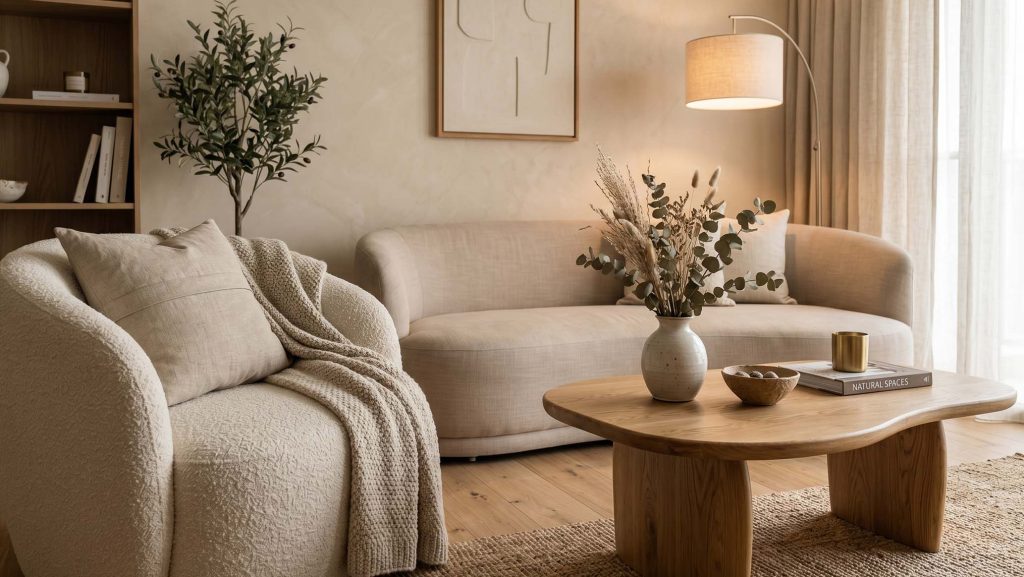
Creating a soft modern home does not require excessive decoration or complicated styling. The focus is usually on balance, restraint, and carefully layered comfort.
Many homeowners start with a neutral base palette before adding warmth through texture and material selection. Wood finishes, soft fabrics, and warm lighting often help spaces feel more grounded naturally.
Useful design considerations may include:
- Choosing rounded furniture pieces
- Layering textures instead of excessive décor
- Using warm ambient lighting
- Incorporating natural materials
- Maintaining visual simplicity without emptiness
Too much decor has to be avoided as well. In a soft modern space, the space should be a place of visual rest and simplicity. Many home design trends Singapore homeowners currently follow now prioritise emotional comfort alongside visual consistency.
The resultant dwelling is a house that is not too difficult to upkeep and a delight to live in every day.
Conclusion
Interiors continue to evolve to meet the demands of our modern living lifestyles. Minimalist interiors will undoubtedly maintain their popularity but the current majority of owners are tending towards interiors which are less stark, and warm and soft to live in. Thoughtful planning and the use of softer textures and elements can go a long way to achieving a liveable, comfortable space.
What makes the appeal of soft modern interior design Singapore homeowners still embrace is its ability to combine warmth, and softness while not being impractical, but simply elegant and yet casual for any Singapore home. Perhaps, it’s this marriage of form and function which keeps the homeowner drawn to it whether they’re in an HDB flat or in a condominium.
Making a home that feels calm, warm, and genuinely practical really starts with the right design partner. With over 20 years in the industry, MJS Interior has helped many Singapore homeowners turn renovation ideas into reality through careful planning, detailed 3D design, and solid workmanship.
As a CaseTrust‑RCMA accredited firm, MJS Interior is seen as a studio that balances style, function, and budget‑friendly thinking, even when every project looks different.
From the first consultation to final delivery and installation, our team ensures a smooth process. You get professional guidance and attentive project management, so things don’t feel messy or unclear. With positive client reviews and a reputation built over two decades, many homeowners choose MJS Interior for spaces that are comfortable, good‑looking, and easy to live in.
Chat with the team today and see how 20+ years of interior design and renovation can help shape a soft modern home that fits your day‑to‑day life naturally.
FAQs
-
What is soft modern interior design?
Soft modern interior design combines clean modern aesthetics with warmer textures, softer colours, rounded furniture, and comfort-focused layouts.
-
Why are soft modern homes popular in Singapore?
Many homeowners prefer interiors that feel calm, practical, and more liveable while still maintaining a modern appearance.
-
Does soft modern design work in small apartments?
Yes. Soft modern interiors often work well in compact homes because they focus on efficient layouts, lighter palettes, and multifunctional spaces.
-
What colours are commonly used in soft modern interiors?
Warm neutrals such as beige, cream, taupe, warm grey, and muted earthy tones are commonly used within soft modern homes.
-
How do you make minimalist interiors feel warmer?
Adding textured fabrics, warm lighting, wood finishes, softer furniture shapes, and layered materials can help minimalist interiors feel more welcoming.