

How to Create a Home That Reflects Your Personality Without Looking Cluttered
Key Takeaways
- Personalised home design in Singapore is less about how many personal things are in a space and more about what those things are placed against.
- A calm background, consistent joinery, flooring, and wall colour, tends to give personal elements more visual weight than a busy one does.
- Custom interior design in Singapore that accounts for personalisation during the design stage tends to produce a more settled result than personalisation applied after the renovation.
- Clutter often comes from too many elements competing for attention at once, not necessarily from having too many things.
- Residential interior design in Singapore works within compact floor plans. Deciding which surfaces carry character and which give it somewhere to rest is part of the design work.
Introduction
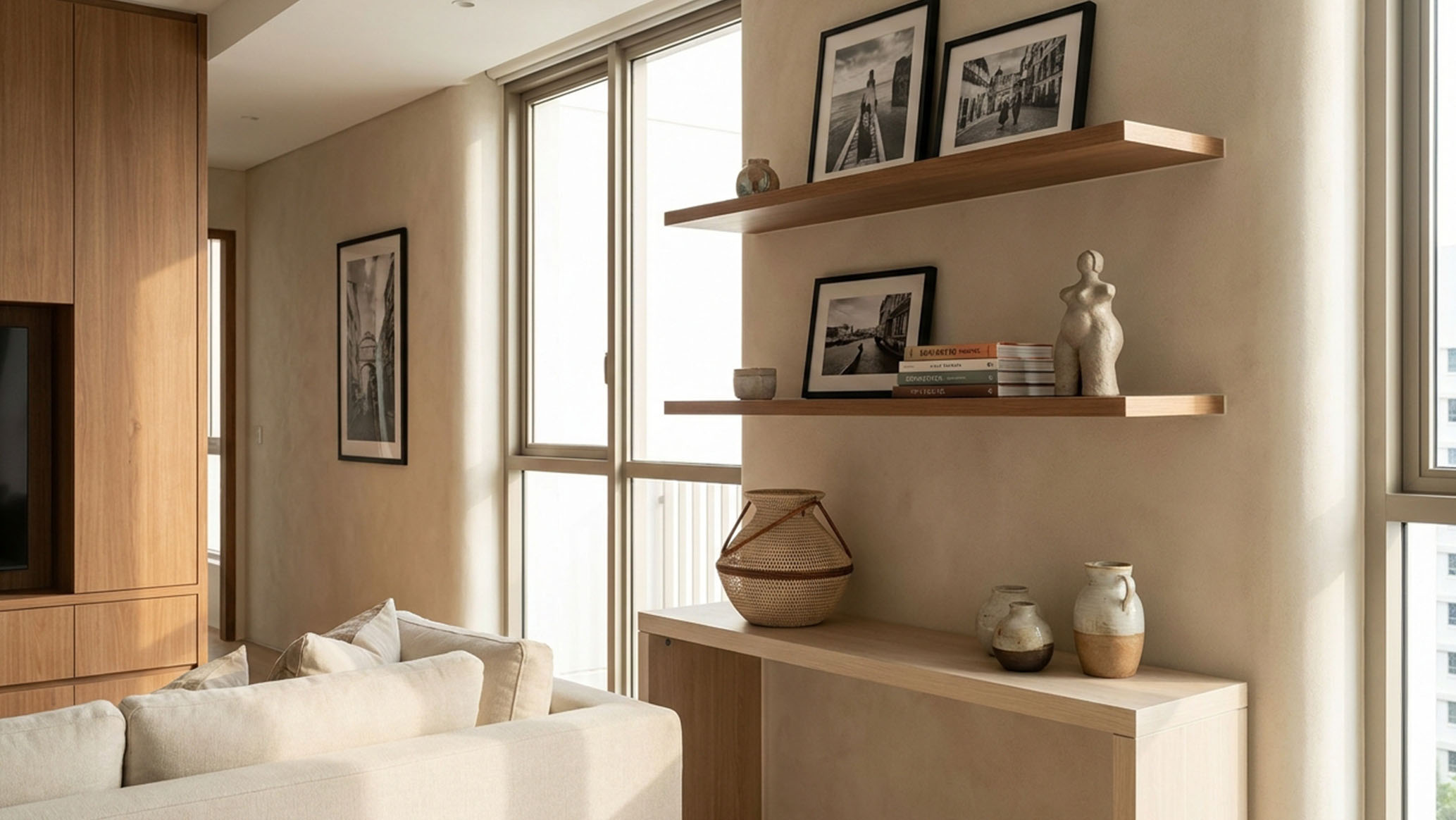
Character in a room does not come from how much is in it. It tends to come from what the things in it are placed against. A meaningful object against a calm wall can hold the eye. The same object in front of a patterned feature wall with competing joinery tones and a decorative ceiling can disappear entirely.
Personalised homes and cluttered ones are not separated by quantity. They are separated by contrast.
Why Does Personalisation Sometimes Make a Room Feel Busier?
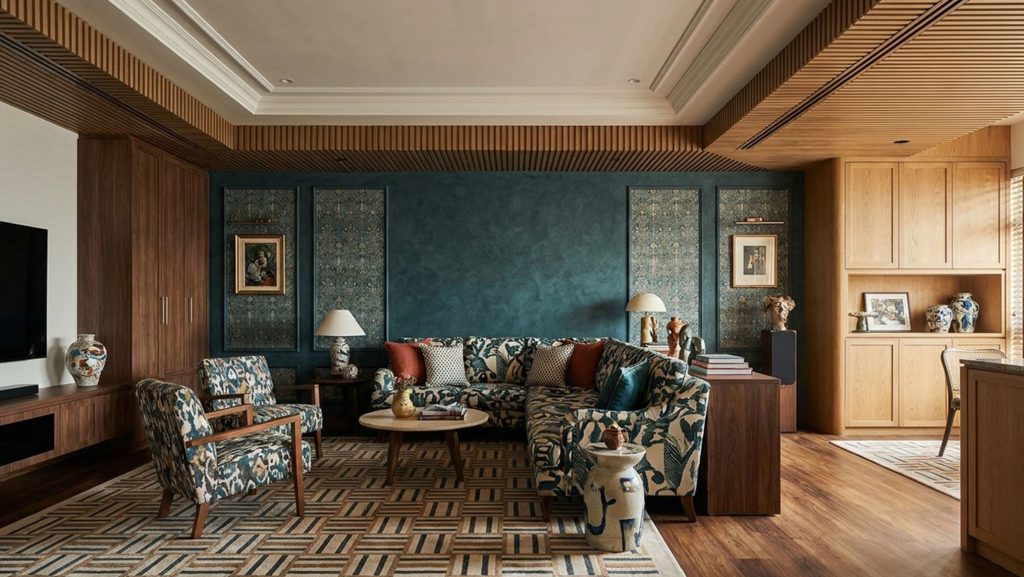
A space starts to feel crowded when too many elements compete for attention at the same time. This does not require many objects. A room with three different surface patterns, two uncoordinated wood tones in the joinery, and a feature wall doing its own thing can feel busier than a room with twice the objects but a consistent, quiet background.
Research on how visual environments affect the brain suggests that excess visual information creates fatigue before a person consciously registers what is bothering them. The issue is not volume. It is competition between elements.
This matters for personalised home design in Singapore. In a compact HDB flat or condo, there is less space to absorb complexity. A renovation where the joinery finish, ceiling treatment, and laminate pattern all carry strong aesthetic statements can leave little room for the household’s actual personality to show. The room ends up communicating the renovation more than the people who live in it.
Personality shows up more clearly when something in the room is quiet enough to let it land.
What Gives Personal Elements Space to Register?
The permanent elements of a home, including the built-in joinery, the wall colour, the flooring material, tend to work better as a backdrop than as the main event. When these carry a consistent direction, personal items placed against them carry more individual weight. When the background is already expressive, adding more to it tends to create noise rather than character.
This is not an argument for minimalism. A restrained background can be warm, textured, and full of material interest. One warm wood tone throughout feels settled. Three different wood tones in the same space pull focus away from everything in it.
Which Personal Elements Work Well in a Designed Interior?
| Element | How it tends to work |
| Artwork and photography | Can be used generously when given enough wall space so pieces are not crowding each other |
| Books and collections | Work better grouped by a loose logic, colour, size, or theme, than scattered across surfaces |
| Rugs, cushions, and textiles | Carry a lot of character per item; two or three in a room is often enough |
| Plants | Add warmth without competing with other visual elements |
| Objects and heirlooms | Register more clearly with some surrounding space than when grouped densely |
| Colour | Flexible in textiles and easy to shift; more committed when built into joinery or walls |
How Does Custom Interior Design in Singapore Handle This?
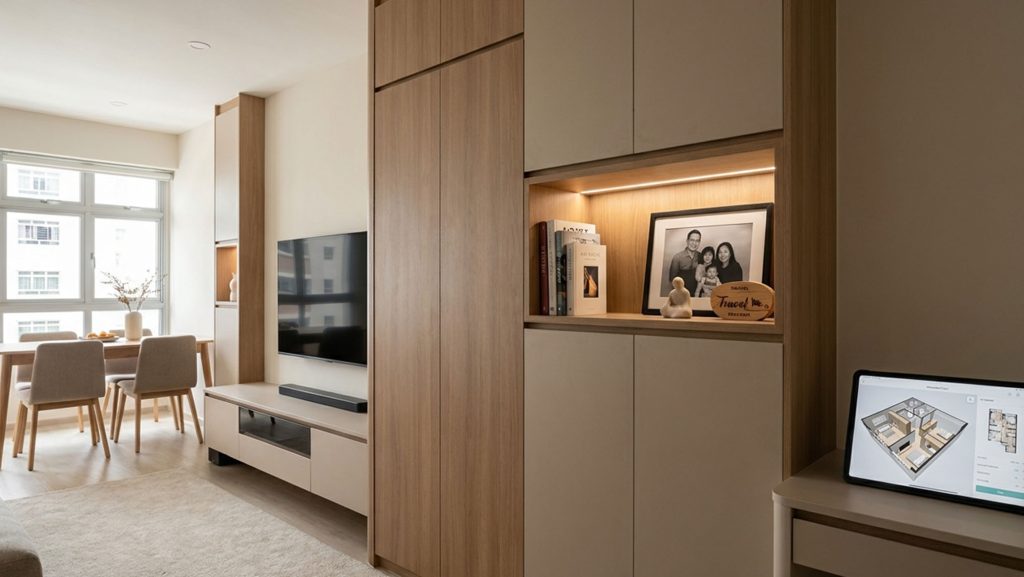
Singapore’s HDB flats and condos leave less room to absorb visual complexity than larger homes do. What feels manageable in a bigger space can feel overwhelming in a three-room flat.
Custom interior design in Singapore that thinks through personalisation during the design stage tends to approach this differently. Questions about what the household wants to display, how much busyness feels comfortable, and which surfaces should stay open can shape joinery depth, storage placement, and wall treatment before anything is built. Once the renovation is finished, personalisation has to work around decisions that were made without it in mind.
Personalised home design in Singapore that starts this way, with the household’s habits and display preferences in mind before style references are chosen, tends to produce a more settled result. The aesthetic direction emerges from the brief rather than being applied to it.
Built-in storage is part of this. When everyday items such as chargers, stationery, and kitchen overflow have a place out of sight, visible surfaces are left for the things that carry character. The distinction between what is stored and what is on show shapes how personal a space feels. A 3D design walkthrough can help settle this before the renovation begins, since it is easier to judge what a surface looks like in context than from a floor plan alone.
The MJS Interior project portfolio includes Singapore HDB and condo renovations where personalisation was part of the design conversation from the start.
Is a Personalised Home Different From a Decorated Home?
In a decorated home, a renovation finishes and personal objects are placed into it. In a personalised one, the renovation was shaped by how the household lives and what they want the space to hold.
The difference tends to show in specifics: joinery with the right storage depth for the actual household, surfaces left open on purpose, colour choices that connect to something real. Residential interior design in Singapore that starts with questions about the household, before style directions are settled, tends to produce homes that feel more distinctly like the people in them.
A useful way to think about it is to ask, before committing to any built-in or permanent decision: is this being chosen because it works for the household, or because it looks good in a showflat? The two are not always the same answer. For homeowners thinking about personalised home design in Singapore, raising that question early in the process, before anything is fixed, tends to lead to a home that carries more of the household and less of a generic renovation.
Frequently Asked Questions

1. What makes a home feel personalised in Singapore?
Design decisions made around the specific household rather than applied generically: storage that fits how they live, open surfaces preserved deliberately, and a visual direction that connects to something specific about them. In Singapore’s compact floor plans, these choices tend to have more impact than in larger homes where there is more room to absorb inconsistency.
2. How do I add personality to a small Singapore home without it feeling cluttered?
Settle the background first. Walls, flooring, and joinery that follow a consistent direction give personal items somewhere clear to land. A single object with some space around it tends to register more clearly than a surface covered in things. Built-in storage that moves functional items out of sight also helps, freeing visible surfaces for what actually carries character.
3. How does MJS Interior approach personalisation?
It is part of the early design conversation rather than something added after handover. Questions about how the household uses the space, what they want visible, and how much busyness feels comfortable shape the decisions about storage, joinery, and which surfaces stay open. The design and build services cover this as part of the process, with examples across different custom interior design projects in Singapore in the project portfolio.
Conclusion
A home designed around the people who live in it tends to feel personal without trying. For homeowners planning residential interior design in Singapore, reach out to MJS Interior or explore the design and build services to talk through what that could look like.