

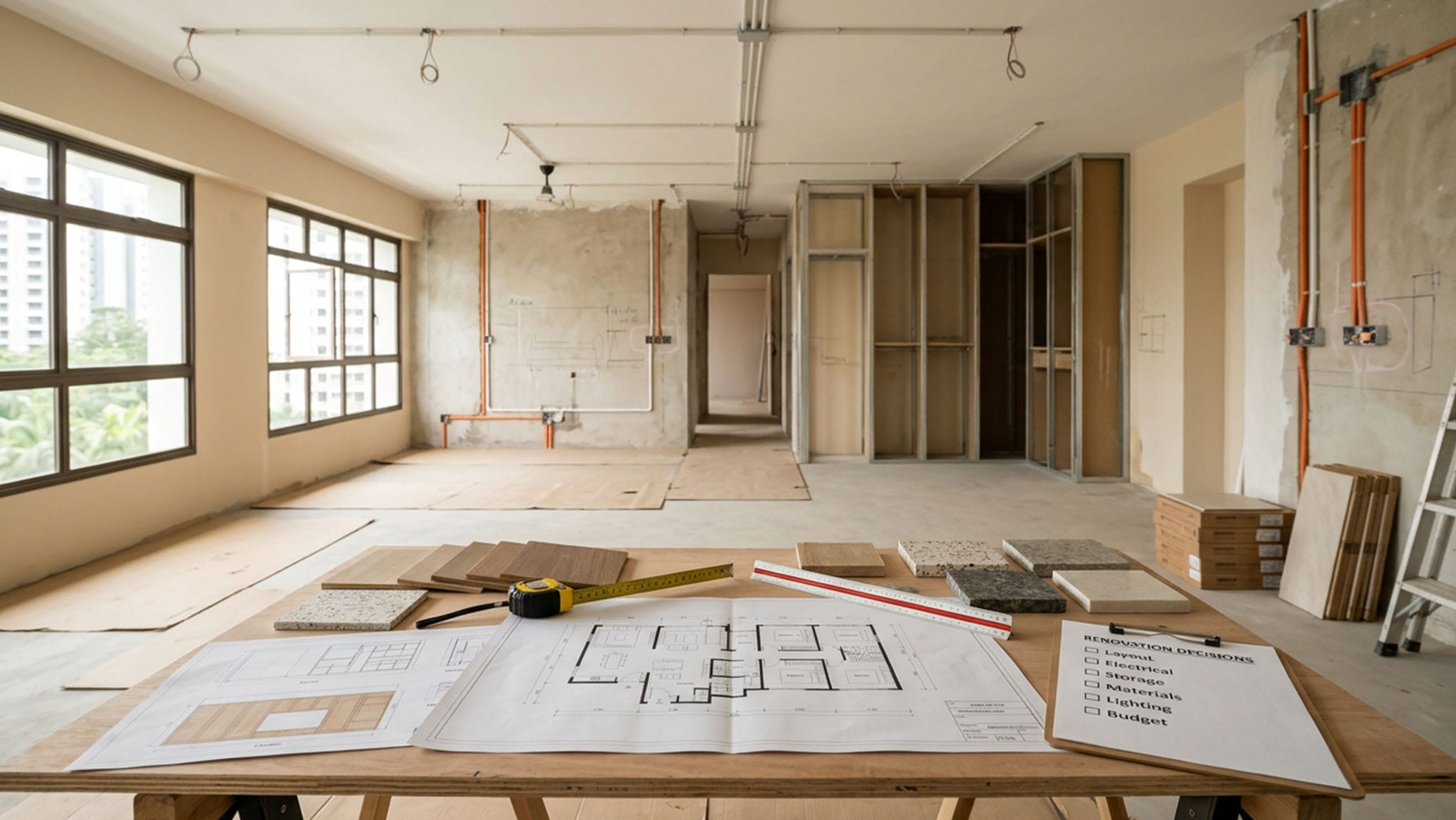
The Biggest Home Renovation Decisions Singapore Homeowners Should Get Right
Key Takeaway
- Time your renovation decisions in Singapore with one test: if changing it later means hacking, wet works, or emptying a room, decide it before move-in.
- Laying new flooring over old tiles skips the hacking but raises the floor, so check for loose tiles and door clearance before you choose it.
- Before renovating a new HDB flat, walk through it and note any defects, since new flats come with a 1-year defects liability period.
- Plan a new flat’s bathroom around its existing tiles, since HDB restricts removing those finishes for the first 3 years.
- Leave furniture, rugs and styling until you’ve lived in the home, but plan power points now for anything like a wall-mounted TV.
Introduction
After a renovation, changing a sofa takes an afternoon. Changing the floor under it means emptying the room, and sometimes the whole flat.
Timing is what separates the two. Sort your renovation decisions in Singapore by when they need to happen, and the dusty work happens once, before you move in.
For each choice, ask yourself one question. Will changing it later mean hacking (breaking out walls or tiles) or emptying a room?
Which Home Renovation Decisions in Singapore Should You Settle Before Move-In?
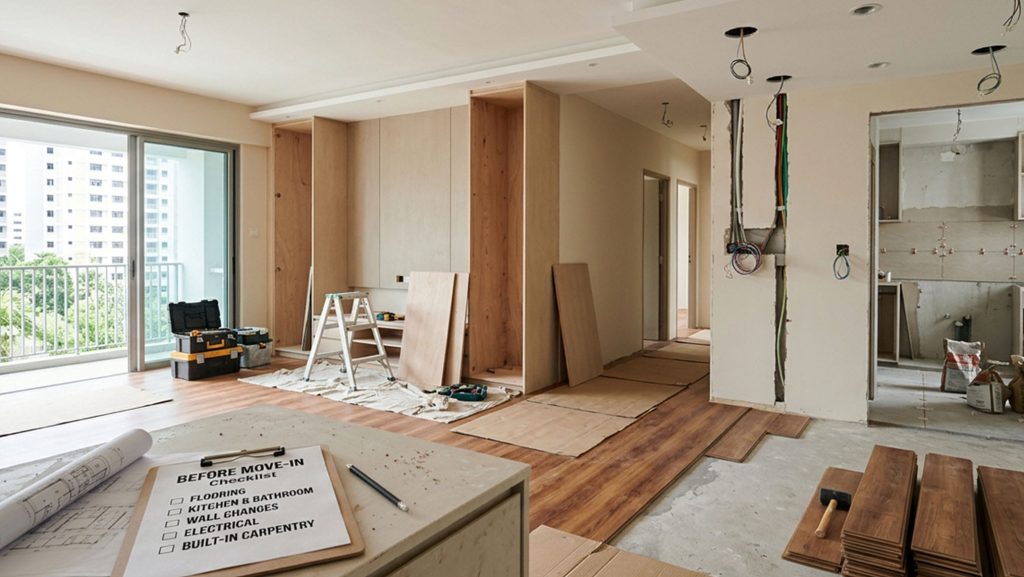
Settle anything that involves hacking, wet works (cement and water work, like tiling), or wiring inside walls before you move in. Once you’re living there, these jobs bring dust and noise into rooms you need every day.
Put these on your before-move-in list:
- Flooring, since replacing it later means moving every piece of furniture out.
- Bathroom and kitchen work, because these rooms are hard to go without for days.
- Wall changes, like opening up the kitchen where the rules allow, which create heavy dust.
- Your electrical layout, because new wiring inside walls means more hacking later.
- Built-in carpentry, which your carpenter measures around the finished walls and floors.
Take this list to your interior design consultation in Singapore. Ask which items need an HDB permit, so there’s time in the schedule to get one.
If you’ve just collected keys to a new HDB flat, start with a defect check. New flats come with a 1-year defects liability period, and defects are easier to spot before new work covers them.
The bathroom needs a separate plan in a new flat. HDB has a 3-year restriction on removing bathroom and toilet floor and wall finishes in newly built flats (as of October 2026). Pick fittings and storage that work with the tiles you already have.
Every decision you lock in before move-in is one less reason to clear a room, or move out, once your family has settled in.
Should You Hack Your Old Floor or Lay New Flooring Over It?
If you’re renovating a resale flat or redoing floors in an older home, it depends on the state of your old floor and how much extra height you can live with. An overlay lays new flooring on top of the old tiles. Hacking removes the old tiles first, so the new floor starts from the base.
The main differences look like this:
| Point to compare | Overlay on old tiles | Hack and re-lay |
| Floor height | Rises by the new layer | Can stay close to the original level |
| Dust and noise | Less, since nothing is broken out | More, from removing old tiles |
| Old tile condition | Works best when tiles are flat and firmly stuck | Doesn’t matter, since tiles come out |
| Doors and steps | May need trimming | Less likely to need changes |
Before you choose, run through these checks with your contractor:
- Tap the old tiles, since a tile that sounds hollow may no longer be firmly stuck down.
- Ask whether the extra height affects your doors or the step into the bathroom.
- If you go with an overlay, tell your carpenter early, because your cabinets will sit on the new, higher floor.
Either way, decide before move-in, since both options mean clearing the room.
Which Renovation Decisions Can Wait Until You’ve Lived in the Home?
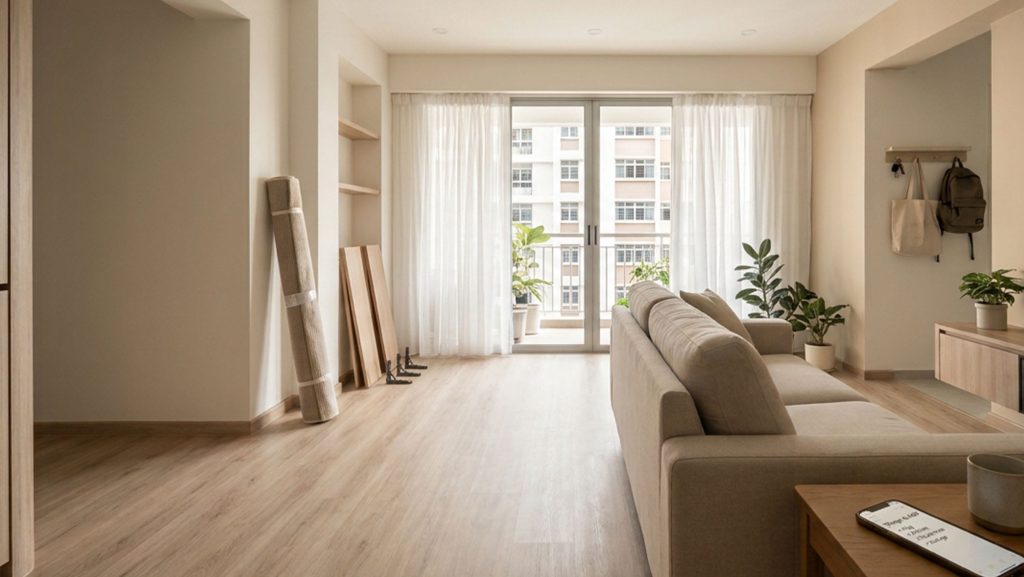
Anything you can add or swap without hacking can wait, like rugs, extra shelves, and styling. A few weeks of living in the home shows you how each room gets used.
For example, you’ll notice where bags and keys pile up. You’ll feel which rooms catch the hot afternoon sun, and find out whether the spare room works better as a study or a guest room. Keep a note on your phone during the first month, then buy based on what you saw.
Waiting also spreads your spending, so the furniture bill doesn’t land in the same month as the renovation.
One thing to watch, though: power points can’t wait. Plan them now for anything you might add later, like a wall-mounted TV or a possible study nook. An unused socket is easier to live with than hacking a wall after move-in.
Still deciding which finishes to commit to now? It helps to know why some renovations age better than others.
A few weeks in your new home can tell you more about your storage and furniture needs than a floor plan can.
What Renovation Mistakes in Singapore Come From Deciding at the Wrong Time?
A timing mistake is a decision made too late, after the work it depends on is done. Watch for these five renovation mistakes in Singapore homes:
| Mistake | What happens | What to do instead |
| Changing the flooring after move-in | Every room has to be cleared again | Decide flooring before work starts |
| Opening a wall after carpentry is built | Built-ins on that wall may need removing | Settle wall changes before carpentry is measured |
| Buying appliances after cabinets are made | The appliance may not fit the opening | Pick appliance models before drawings are final |
| Furnishing every room on day one | You buy for how you think you’ll live | Start with the basics, then add after a few weeks |
| Skipping the defect check in a new flat | Defects get hidden under new work | Note defects before renovation starts |
All five are about order, so spotting them early saves a second round of work. Want to plan around your routine? See how a lifestyle-led renovation starts with your daily habits.
What Are the Biggest Home Renovation Decisions in Singapore?
Start with the choices you can’t easily undo after move-in. That covers your flooring and wet works, plus any wall changes and the wiring inside your walls. Settle these before work starts. Then live in the space for a while before you buy furniture or decide on styling.
Frequently Asked Questions

1. Can I renovate in phases instead of all at once?
In an HDB flat, yes. Each round of works has to follow HDB’s rules, including a permit where one is needed. You’ll also need a firm on HDB’s Directory of Renovation Contractors. Put the hacking and wet works in the first phase, so later phases are lighter.
2. Does laying new flooring over old tiles affect my doors?
It can, because the new layer raises the floor. Ask your contractor to check how much space there is under your doors. Sorting this out before the flooring goes down saves trimming doors afterwards.
3. Should I choose appliances before or after the carpentry design?
Before, or at least decide the models and their sizes. Your carpenter builds the cabinet openings around them, so a late switch can leave the oven or fridge without a space that fits.
4. What renovation decisions in Singapore come first if I’m short on time before move-in?
Start with anything involving hacking, wet works, or new wiring, since these are hard to redo later. Book your interior design consultation in Singapore early, so these items make it into the early plans. Furniture and styling can follow once you’ve settled in.
5. Can I stay in my flat during the renovation?
It depends on the works. If your plan includes hacking or bathroom tiling, arrange somewhere else to stay for those days, since some rooms may be unusable. Lighter jobs, like painting or putting up shelves, are easier to live around.
The big jobs, like flooring and wiring, are easy to sort out while the flat is still empty. A bit of planning at that stage can spare you a second round of hacking once your family has moved in. Make your renovation decisions in Singapore in that order, and the dust and noise only happen once. MJS Interior takes each project from consultation and 3D design through to installation, so the order of work is planned from day one. To talk through your plans, see how MJS Interior handles home renovation in Singapore.